

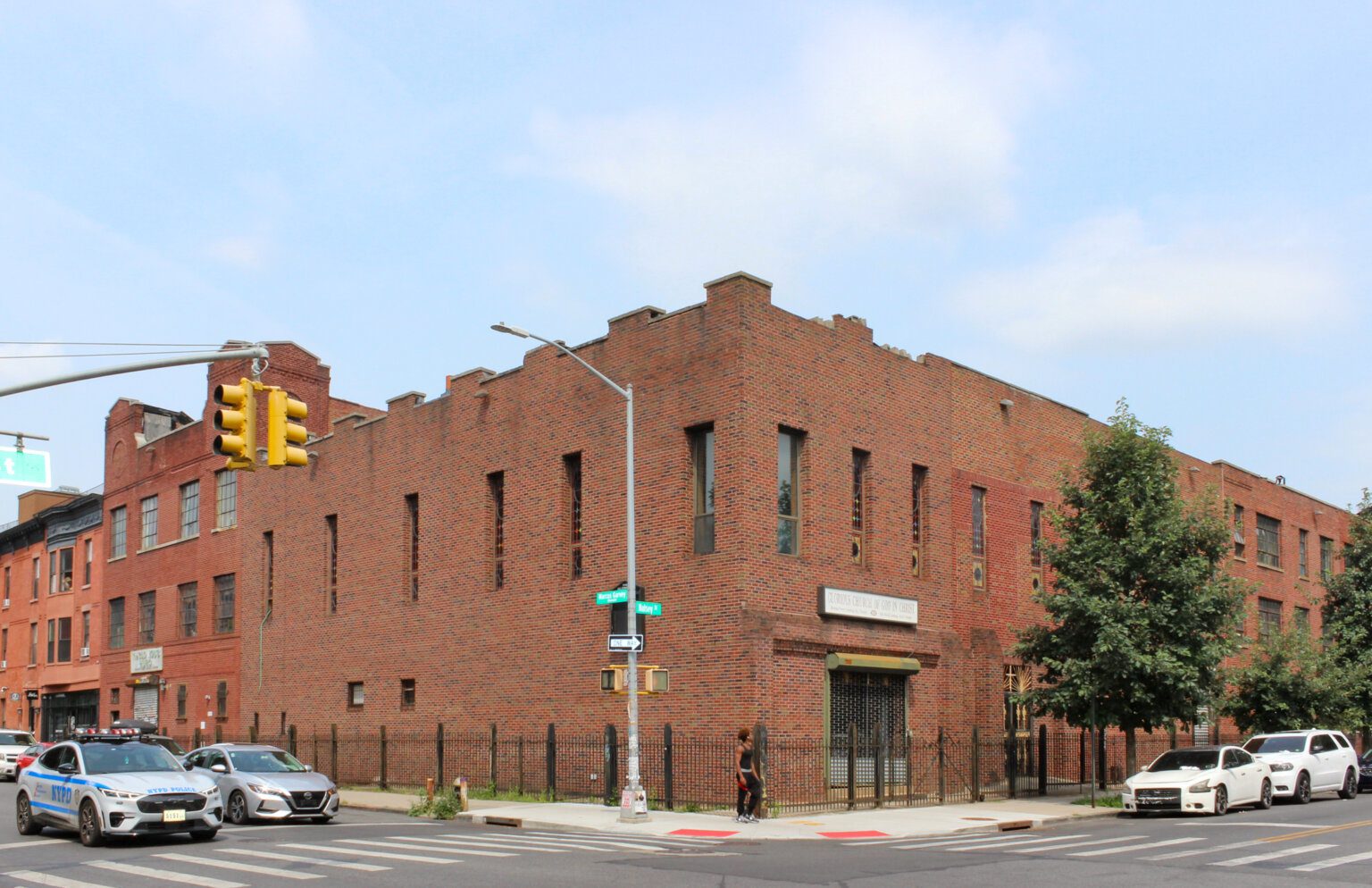
The Bedford Stuyvesant and Stuyvesant Heights neighborhoods in Brooklyn were built primarily as residential areas. While there were a few outlying pieces of land and streets like Fulton that housed manufacturing, there were mostly residential buildings here. Therefore, the presence of the Rand Rubber Company building, which at the beginning of the 20th century worked as the Brooklyn Shield and Rubber Company, looks quite strange and unexpected. It is the same age as the armory and the residential building. They actually were developed together. Read more about the Victorian rubber factory that turned into the Glorious Church on brooklyn-name.
Factory in a residential area
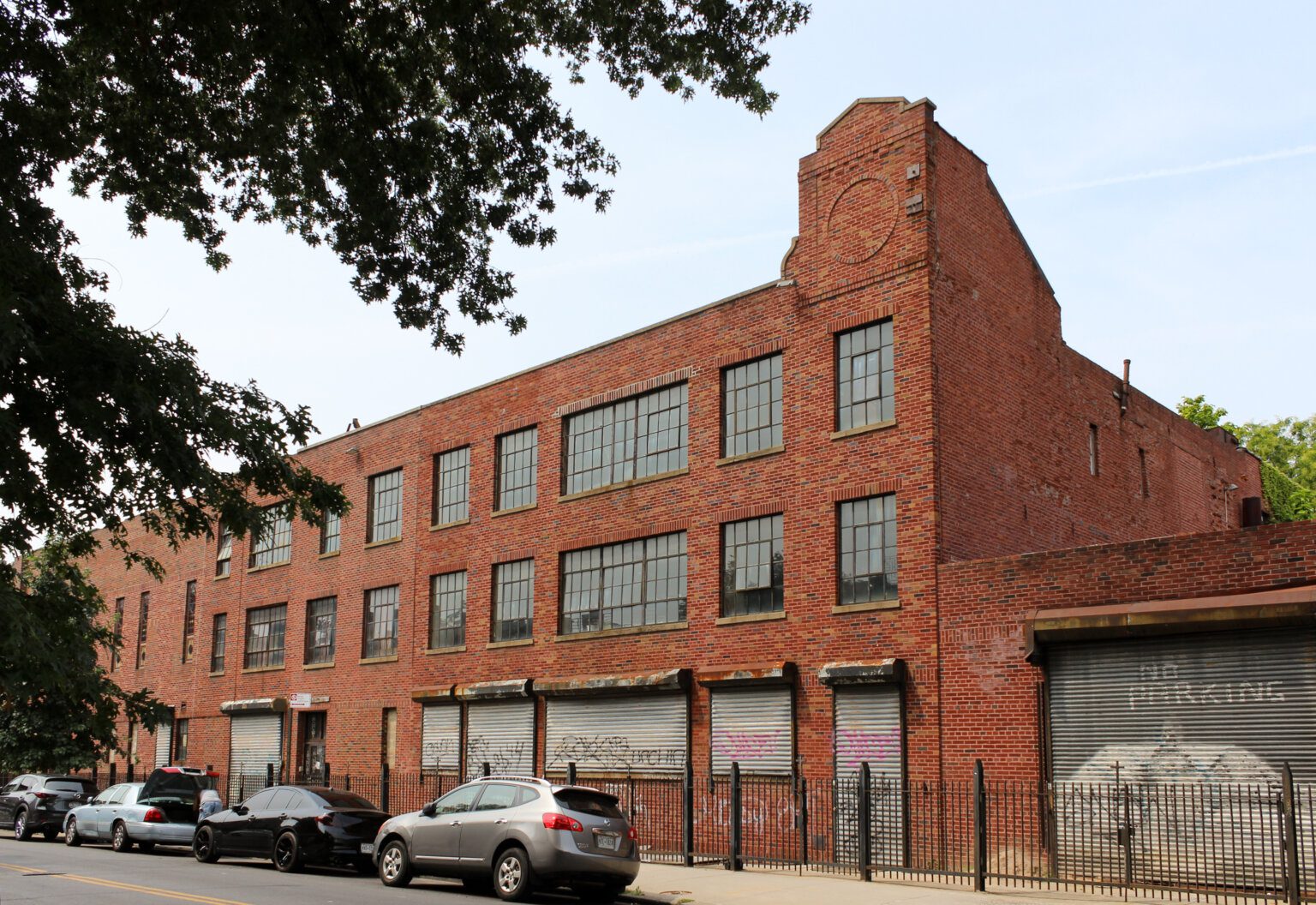
In 1888, two strangely shaped stone buildings were already built here. They belonged to a rubber factory called the Rindskopf Brothers Company that operated in the 1890s. Even then, local residents who lived nearby complained about the production. It was located on Sumner Avenue, which today is Marcus Harvey Boulevard. Despite the complaints, the factory continued to develop, capturing the entire corner. The rubber factory acquired its modern appearance approximately in 1908.
The Brooklyn Shield and Rubber Company made rubber clothing such as bathing caps, rubberized underwear for children and shields for women’s dresses. There was an ad in the Brooklyn Eagle of those days looking for female workers to make all these things. By the way, dress shields are pieces of fabric similar to butterfly wings, covered on one side with a thin rubber layer. They are fastened under the armhole of clothes to protect the fabric from sweat. Since people used their clothes until they wore out, this tool extended their service term. One can still find them on sale today, but few people need them. They are not the subject of big business.
Lawsuits
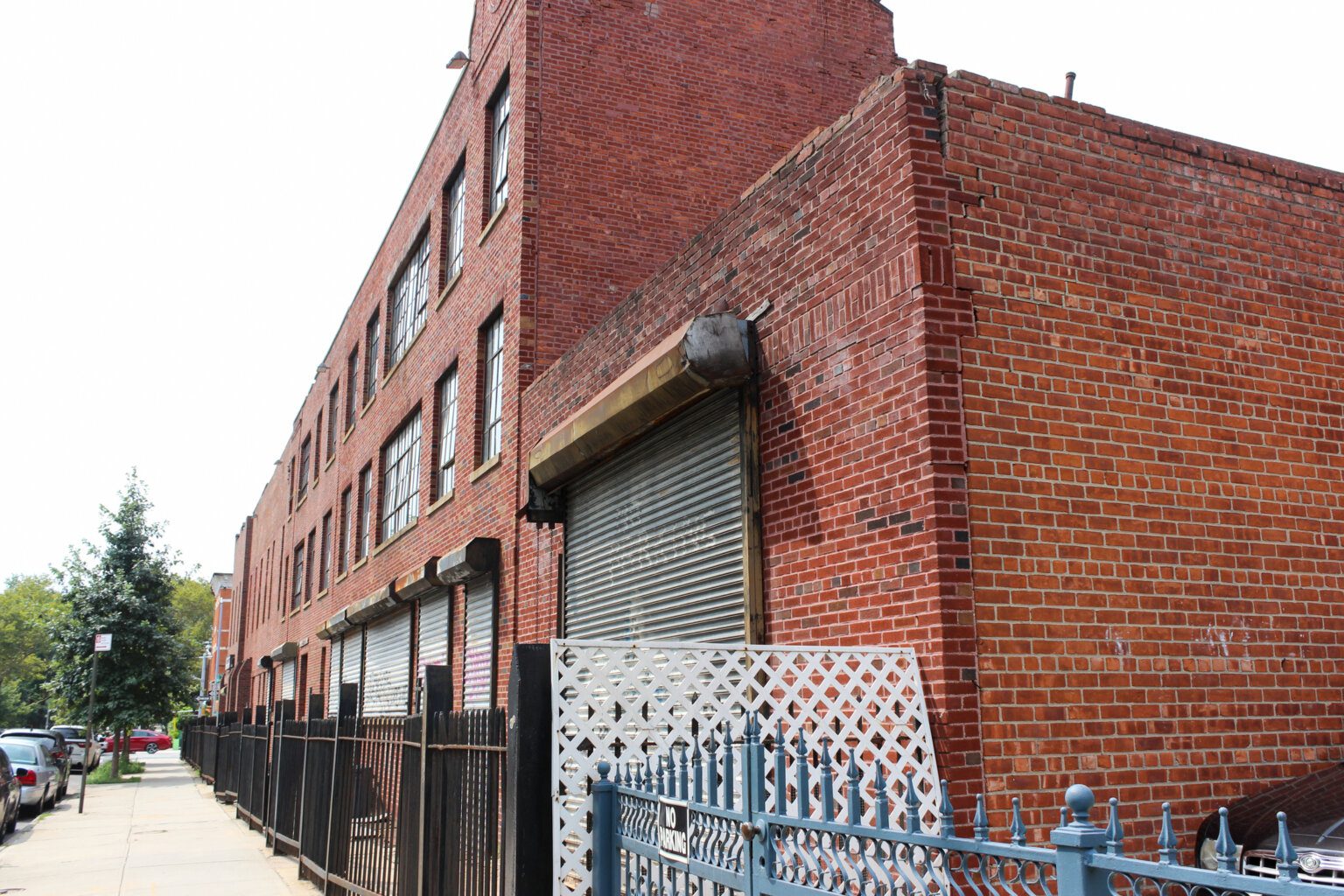
The Brooklyn Shield and Rubber Company was owned by Henry P. Rand, who lived at 348 New York Avenue near President Street in Crown Heights. In 1922, the company purchased new equipment, which caused neighbors living nearby to complain and file a lawsuit. The nature of the complaints was that the vibrations from the operation of the equipment caused noise, disturbing the residents, as well as cracks in the walls and ceilings of their houses.
The courts witnessed testimony from 30 people and visited the factory to check this information. Rand testified that the mechanism did not vibrate to such an extent and operated quite quietly. The case was one of the longest in the annals of the local Court. In the end, the factory was acquitted of public nuisance charges. A year later, eight homeowners on Hancock Street, behind the factory, filed another lawsuit. It is not known how this case ended.
Henry Rand’s tragedy
In 1935, Henry Rand died in a terrible fire that destroyed his summer home in Branford, Connecticut. He was 81 years old and only retired a few years ago after handing over the company to his son, Leroy Rand. Henry Rand with his wife and servants was in his country house when the fire started. Mrs. Rand and the maids escaped but the owner was trapped on the second floor. He called for help. A neighbor who tried to get into the house broke his leg, falling through the floor. Henry Rand’s body was later found on the stairs on the first floor. He almost got out.
It is not known how long Rand Rubber Company operated at the location. Leroy Rand owned the building until 1970 when he sold it to the Henroy Company. In 1982, the city sold the abandoned building to the Glorious Church.
