

Charles Pratt was one of the 19th-century Brooklyn entrepreneurs who were called “wizards” for their incredible success. He was born in Massachusetts in 1830. He had ten siblings, and his father was a carpenter. The family lived in poverty, so Charles started working at a very young age, having received only a few classes of primary education. It was just enough to learn how to read, write and add numbers. Learn more about one of Brooklyn’s most successful entrepreneurs as well as the history of the establishment of his company at brooklyn-name.com.
First steps in business
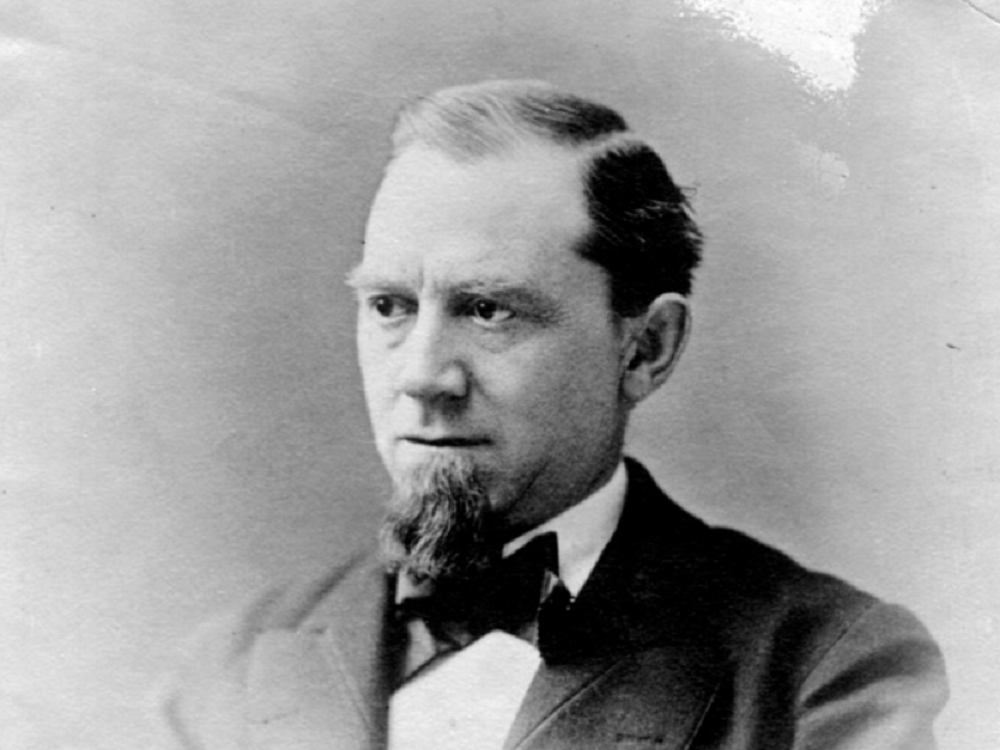
As a young man, he began his career in the whale oil business in Boston, working for a company that produced and sold fuel, which was America’s primary source of lighting before the Civil War. In 1851, Pratt relocated to New York City, already established as a whale industry veteran. However, whales were hunted very vigorously in those days, almost until their extinction, which did not contribute to the cause. Fortunately, a new lighting source, kerosene, began to gain popularity. It should be noted that this petroleum distillate was truly a blessing.
Without hesitation, Pratt changed the direction of his oil business and invested in new wells in western Pennsylvania. He and his partner Rogers founded an oil refinery in Greenpoint, on the banks of the East River and Newtown Creek. His new facility, which opened in 1867, was among the first modern oil complexes of its time.
The refinery, which Pratt named Astral Oil, produced a variety of petroleum products, but the most popular was kerosene. This lamp oil burned cleaner, had less smell and was less flammable, thus it lasted longer. “It won’t explode!” was one of the company’s slogans. Kerosene was advertised around the world in a campaign boasting that “The holy lamps of Tibet are primed with Astral Oil.”
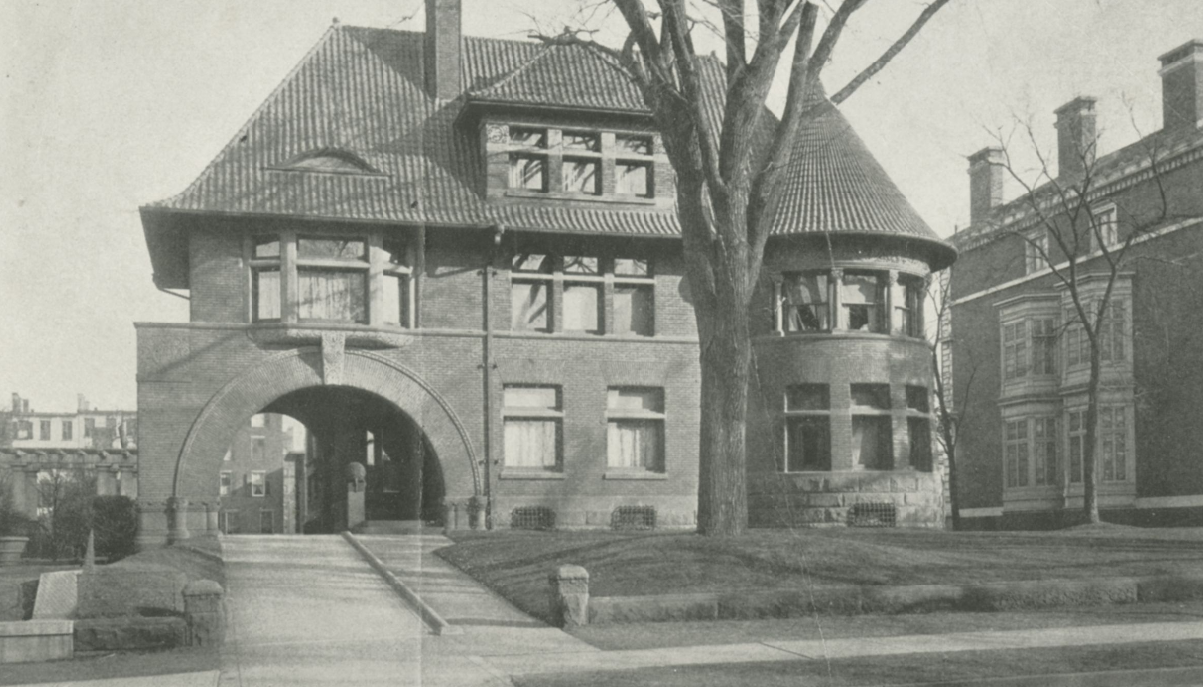
Pratt’s refinery was so successful that it drew the attention of John D. Rockefeller of Standard Oil. The men were fierce business rivals at first, but eventually realized they would be better off as partners. In 1875, Astral Oil merged with Standard Oil, resulting in huge profits for Pratt and Rogers. Pratt was awarded a partnership with Rockefeller and a seat on the board of directors of Standard Oil. A year later, Charles Pratt became the wealthiest man in Brooklyn. He celebrated by constructing a huge mansion on Clinton Avenue, followed by four more on the same street, which were wedding gifts for his sons. Except for one house, they are all still standing. He also encouraged his colleagues to establish Standard Oil in Clinton Hill, which eventually became Brooklyn’s most prestigious neighborhood.
Large fire
Also, there were some unpleasant moments in Pratt’s operations. In late 1884, Pratt’s Astral Oil Works, located on Bushwick Creek in Williamsburg, caught fire. It was massive. It was discovered following an explosion that rattled nearby residences and shattered windows in apartments 300 feet ahead. The flames then extended to two oil tanks, each containing 2,500 barrels of “black gold”, and the tanks exploded, spreading the fire much further. As a result, on December 22, 1884, the Pratt’s Astral Oil Works plant burned down entirely. While the oil storage facility burned, firemen saved a tin shop and a refinery. Fortunately, as Charles Pratt later stated, the majority of the damages were covered by insurance.
Furthermore, Pratt’s great wealth enabled him to devote himself to what was close to his heart – philanthropy. He was a devout Baptist, and his faith motivated him to invest in it. He generously donated to the construction of local Baptist churches, made significant investments in Adelphi Academy in Clinton Hill and, most notably, created a technical school that bears his name. Additionally, Pratt Institute was founded in 1887.
Charles Pratt also invested in the housing. Through an institute named after him, he founded the Morris Building Company, which built and sold speculative row homes, the kinds that are now referred to as “affordable housing.” He also constructed apartments for his Astral Oil employees in Greenpoint. The massive structure dubbed the “Astral Apartments,” is one of Brooklyn’s most significant and unique responses to workers’ housing demands in the nineteenth century. This house represents a shift in Victorian housing standards, overall, the structure was ahead of its time.
Pratt believed that the best employees were those who were healthy in body and spirit. This was a novel concept at a time when most business owners expected their employees to work twelve hours per day, six days a week and at a low wage. Most of them did not care where or how people lived. Pratt was one of the few people who did care.
The greatness of Charles Pratt
Unlike most apartment structures at the time, Pratt’s dwelling included lighting, ventilation, indoor plumbing and amenities. The philanthropist was quite delighted with the Pratt campus buildings designed by Hugh Lamb and Charles A. Rich. He commissioned Lamb & Rich to develop the Astral. After a thorough preparation work, the house was designed. The construction was based on innovative multi-family housing that was previously developed in London by another English philanthropist, George Peabody.
The Astral Apartments was constructed as a six-story building with 108 flats. The structure arcs around a large paved courtyard. The architects designed a massive Romanesque Revival building with arched windows and entrances. It is made of brick, with various types of stone, special-shaped bricks and terracotta elements.
The front facade walls are two feet thick, while the side walls are slightly thinner, with internal security features that make the structure more fire-resistant and safe. The Astral is divided into six sections, each having a stunning entrance. These areas overlook the courtyard, providing each apartment with natural light and air, as well as one window per room, which is unprecedented.
The hallways included windows for ventilation, which was also extraordinary. Other unusual amenities in the apartment buildings included hot and cold running water, a stove and a separate toilet for each apartment. You could swim in the large bathrooms with marble separators in the basement, which was the main luxury of an apartment building back then.
Initially, the Astral included three-, four- and five-room apartments. Later, two- and six-room apartments were added. The larger apartments included marble fireplaces. All apartments had wooden clapboards in the corridors and living rooms, as well as wooden doors, gas lighting and coal boxes. Each unit had both a folding kitchen table attached to the wall and a regular dining table.
Reading and business collaboration skills
The Astral also had some unique innovations that reflected Charles Pratt’s desire for social development. There was a reading room and lecture hall originally housed in the basement. On one of the walls was a big fireplace with the inscription “Waste neither time nor money”. That fireplace still stands where the house’s boiler room is currently located.
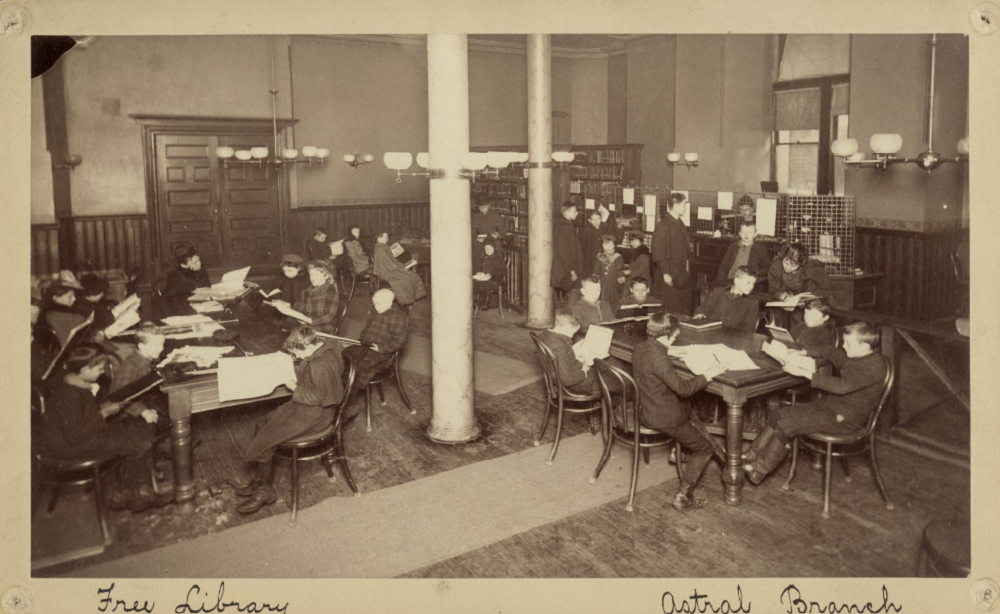
The Astral’s first floor was designated for storefronts. In the 1890s, a basement library was established in the India Street storefront. Originally designed primarily for tenants, it later became a branch of the Brooklyn Public Library system. Today, the library room serves as a laundry room. In 1894, the Astral Kindergarten opened in the building, which was later converted into a restaurant. Initially, only tenants had access to the kindergarten, but it was later opened to all children. The remaining retail area was converted into cooperative units managed by tenants.