

A long time ago, the territories of big cities were covered with flourishing forests and meadows. However, major progress and industrialization led to the disappearance of forest plantations, causing some species of flora to become extinct forever.
Brooklyn is just one slice of “The Big Apple,” but it also contributes to the greening of the city. Brooklyn Botanic Garden has become a genuine island of life in a sea of concrete. What are the secrets hidden in the branches of the Brooklyn oasis? Find out more at brooklyn-name.com.
A brief history
In 1897, the city authorities reserved an area of 39 acres (15.8 hectares) for the future park creation. But the very foundation of the botanical garden began only in 1910. The garden was designed by Calvert Vaux and Frederick Olmsted, the architects who previously had projected Central Park and Mount Prospect Park. Famous American botanist Stuart Gager became its first director and occupied this position for 30 years. Besides his work in the garden, Gager was president of the Botanical Society of America and the Torrey Botanical Club. Even before he headed Brooklyn Botanic Garden, he managed to accomplish great achievements in botany. Under his care, the garden burst into blossom in every sense of the word… The Botanic Garden was no longer just a place for strolling as it began to play an important role in the educational sphere of Americans. In 1914, a kindergarten and a children’s educational program began to operate in the garden area. New York school students visited the Botanic Garden almost every day. A year later, a piece of another culture appeared in the park, the famous Japanese Garden.
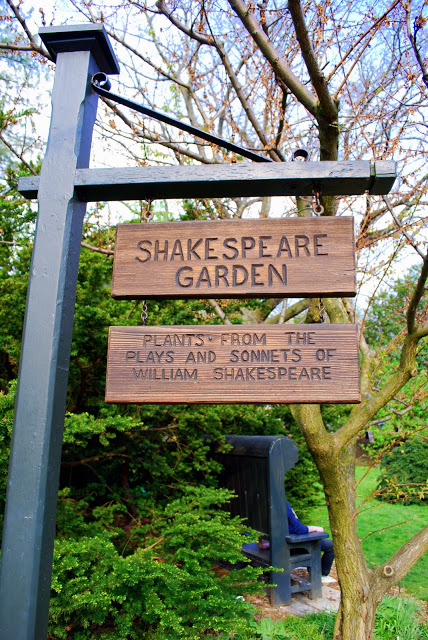
Each year the garden developed at a fast pace. A small part of Japanese culture reproduced in the garden attracted the attention of both visitors and various patrons. Already in 1925, the first collection of 32 bonsai trees planted in pots appeared there. Immediately after the bonsai collection, the Shakespeare Garden was opened. It was established on the donation of Henry Folger, a chairman of Standart Oil company. He was one of America’s major collectors of Shakespeare literature and the founder of the Folger Shakespeare Library. By doing so, he shared his love of Shakespeare with Brooklynites.
This gift was not the last in the list made by famous people to the Botanic Garden. The Osborne Garden opened in 1939, was donated by Mrs. Elizabeth Osborne.
During the formation of the Botanic Garden, the management tried to make it as convenient as possible for all segments of the population. Thus, the Fragrance Garden, founded in 1955, became a cozy place for people with poor sight. Each exhibit has signs with Braille script. Therefore, this was the first garden in America to satisfy the needs of everyone, and which multisensory approach was appreciated by all.
In this garden, every visitor can not only feast their eyes upon beautiful and rare plants but also smell and touch them. Also, the planting beds, as well as signs, are arranged conveniently for people in wheelchairs.
Brooklyn Botanic Garden was constantly upgraded and developed. There was no moment when management would stop it. In 1992, the Rock Garden was renovated. In 1996, the Botanic Garden announced itself on the Internet by creating an official website.
Brooklyn Botanic Garden was not funded by the city. It is maintained on a volunteer basis due to donations from patrons and New York budget funds.
Primary tasks of the garden
All people certainly will say that the main purpose of any botanical garden is to demonstrate the entire spectrum of the plant world of our planet. There are as many as 11,000 species in Brooklyn Botanic Garden, but this is far from the central task of the Brooklyn oasis.
The garden is entrusted with the mission to conduct scientific research in botany and various social programs, in particular educational ones.
The significance and importance of the Botanic Garden were highly appreciated by both Brooklynites and American botanists. In 2002, the DGCI office (U.S. office of Botanic Garden Conservation International) began operating on its territory. The following year Brooklyn Academy of Science was established here.
For the maintenance of the adjacent territory and all vegetation, botanists were required. In 1917, special laboratories were opened in the garden, which later became part of the Orangery of Palms.
The garden area arrangement allows not only scientists but also visitors to meet all their needs. There is a cafeteria for a comfortable rest where one can take a break from contemplating the natural beauty. The garden also has a souvenir shop, in which one can buy a memento and at the same time invest in the botanical garden.
A bit of Japan
The first Japanese garden in America was created at Brooklyn Botanic Garden. The garden design was approached with great responsibility, thus a famous Japanese landscape designer Takeo Shiota was invited. Shiota spent most of his life traveling around Japan, exploring natural landscapes. He walked throughout the country on foot. However, he came to America in 1907 to fulfill his dream to create a real Japanese garden.
The main symbol of the Japanese garden is the traditional red gate Torii. The Japanese believe it is a gateway to another world and walking through it, one can get to the other side. The Brooklyn Torii was modeled after the actual gate at the Itsukushima Shrine on the island of Miyajima.

In 1980 the Botanic Garden received a luxurious gift — a 500-year-old traditional stone lantern. It was sent from Tokyo. The gift was made in honor of New York and Tokyo becoming sister cities in 1960. The lantern is almost three tons in weight and is 10 feet (3 meters) tall.
Another attraction of the Japanese Garden is the bonsai collection. The park had its own specialist in these dwarf trees, Frank Okamura. He worked as a bonsai caretaker at Brooklyn Botanic Garden for over 30 years.
In addition to bonsai, the Brooklyn Garden is famous for its Sakura alley. The first cherry trees were planted in 1921 to coincide with the end of the First World War. This time, Japan sent seedlings as a present again. Later, the exposition was replenished with 20 varieties of Sakura. They bloom in different seasons allowing visitors to admire their colors all year long. Brooklyn Botanic Garden, except for Japan, is the undisputed leader in the number of Sakura trees.

Flowers, flowers, flowers
The Shakespeare Garden is an example of how memory honoring can be approached with imagination. About 80 different plants grow in this garden, but these are not just flowers and herbs, they were all mentioned by William Shakespeare in his works. Due to the founders of the Shakespeare Garden, each plant is accompanied by a sign containing excerpts from novels where the specific plant is mentioned.
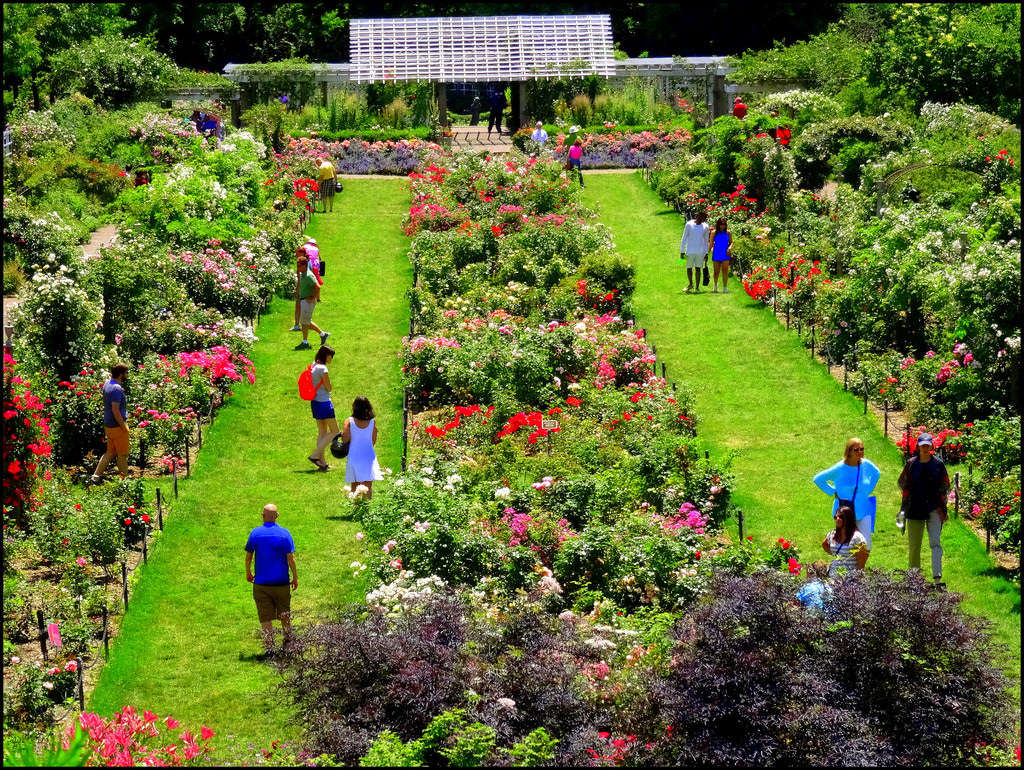
The symbol of the state of New York is a rose. That is why it is not surprising that the Brooklyn Garden decided to honor its home state by amassing the richest collection of roses in North America. The garden was named Cranford Rose Garden after Walter Cranford, who donated 15,000 dollars to its creation. Over time, the collection was enriched with five thousand bushes of 1500 varieties.

The symbol of New York City is the narcissus, so in 2007, Mayor Bloomberg made a choice in favor of this particular flower. This decision was made after 2001. Commemorating the victims of September 11, the flower magnate Hans van Waardenburg gifted a million narcissus bulbs to the city. Tens of thousands of volunteers got out on the streets to plant flowers. By 2015, their number reached 6 million, and some of them can be found in Brooklyn Botanic Garden.