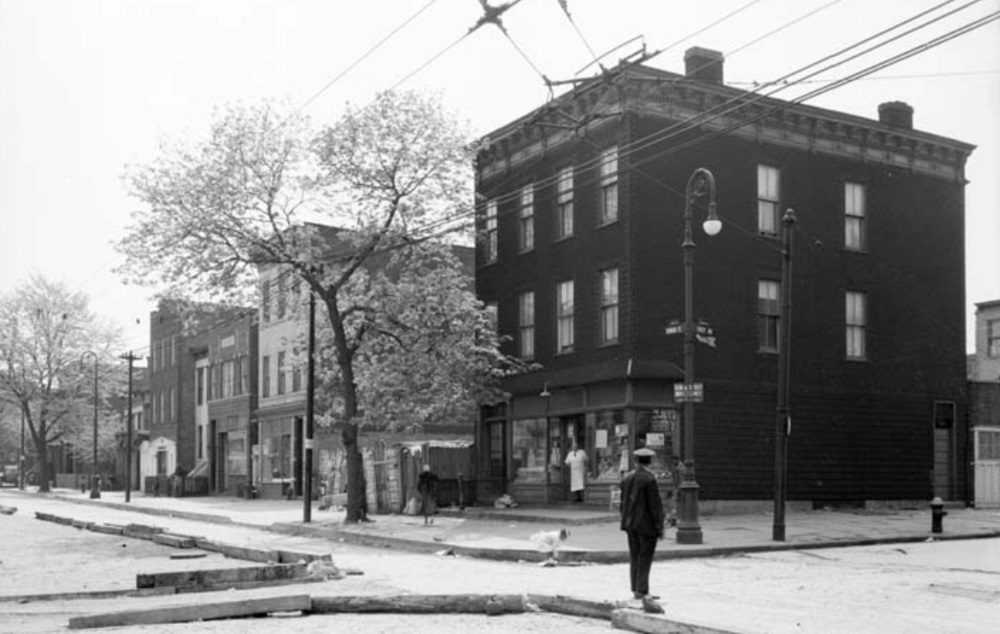
Choose any public park in Brooklyn that now flourishes and delights locals and visitors alike with its greenery and blooms, and explore its history. At some point, the site of this park may have been a warehouse, an apartment building, an estate, a reservoir, a landfill, a cemetery, or even a prison. The transition from private ownership to public use is usually long and complex. Learn more about the rich history of some of Brooklyn’s most well-known parks on brooklyn-name.com.
Brooklyn Heights Promenade
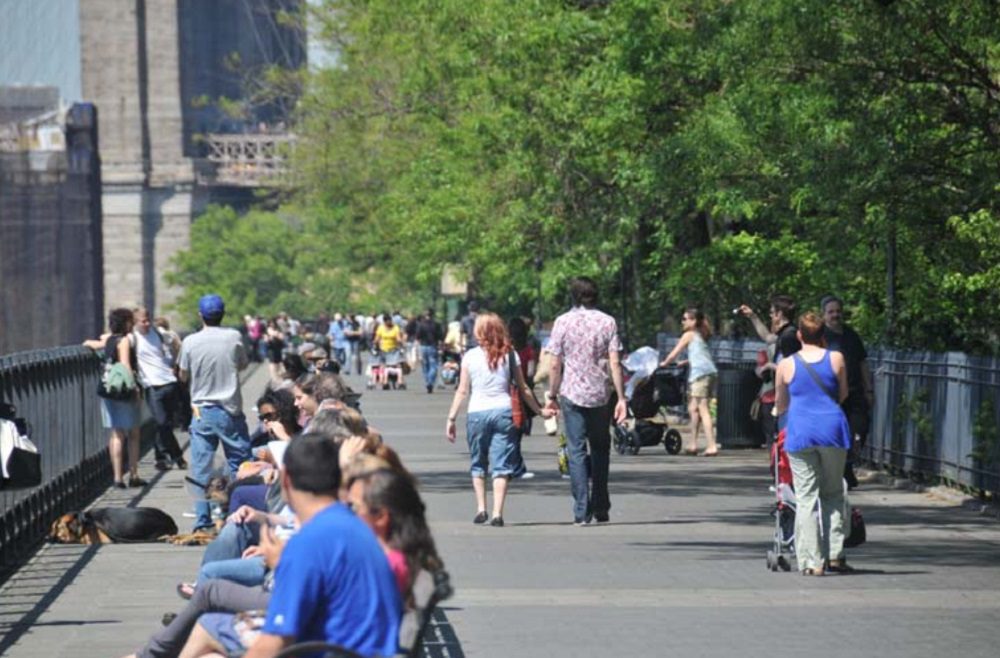
Brooklyn Heights, one of New York City’s oldest neighborhoods, was designated the city’s first official historic district in 1965. The townhouses along Columbia Heights, built in the 1820s, originally had large private gardens at the rear, sitting atop a steep bluff with spectacular views of New York Harbor, the Manhattan skyline, and Brooklyn’s industrial waterfront.
As early as 1825, Hezekiah Pierrepont, a prominent landowner and the “father” of Brooklyn Heights, proposed a public promenade to allow everyone to enjoy these breathtaking views from both the waterfront and the ridge above. His vision was finally realized in 1941 when the city proposed building the Brooklyn-Queens Expressway through Brooklyn Heights. Community opposition led to a compromise: a two-level highway was constructed along the edge of the neighborhood, and in the 1950s, a public promenade was established above it.
Dreier-Offerman Park
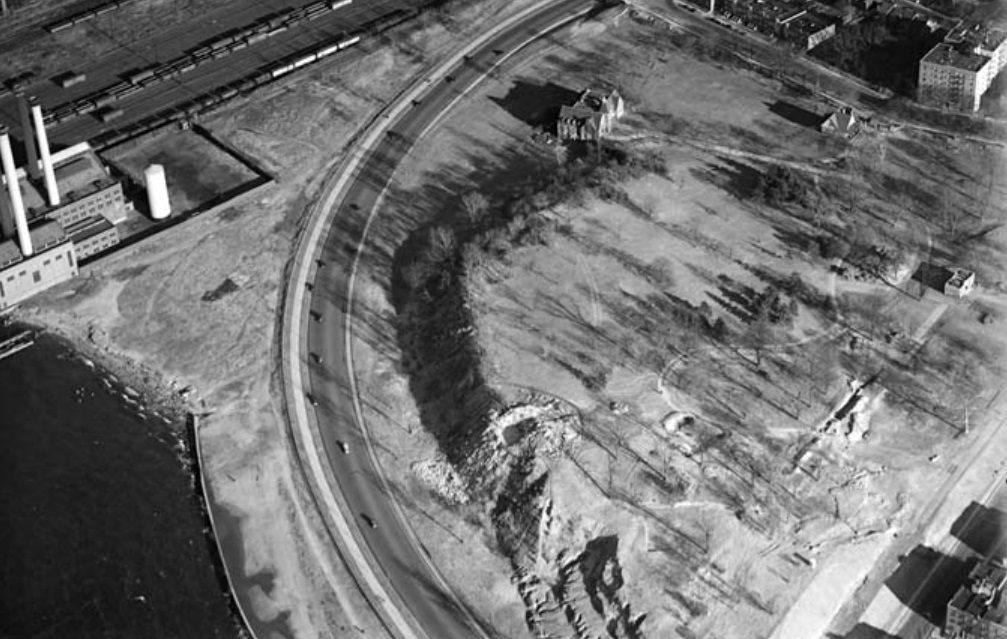
The next park in Brooklyn with a compelling history is Dreier-Offerman Park, now known as Calvert Vaux Park. It underwent continuous changes for nearly eighty years. The first parcel of land was acquired by the city in 1933 as a donation from the Dreier-Offerman Home for Unwed Mothers and Their Children.
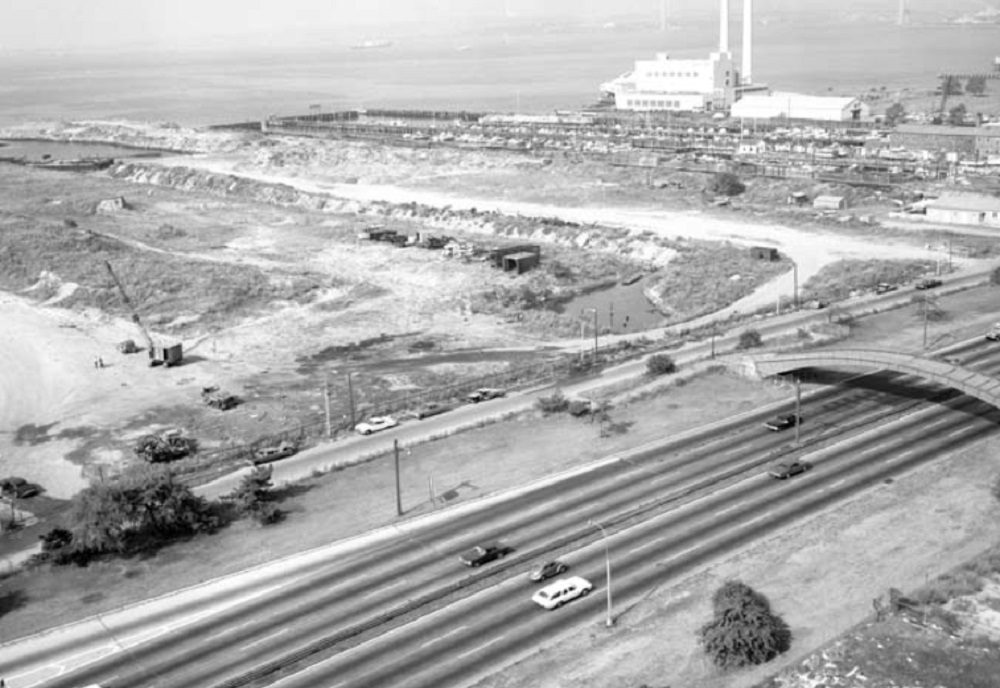
By 1941, an elegant pedestrian bridge over Shore Parkway (the Belt Parkway) had been built, but it remained a “bridge to nowhere,” connecting only a narrow pedestrian and bicycle path. In 1962, two more land parcels were acquired, but for decades, the area remained largely unused by the public, marred by illegal dumping, industrial use, and even a manure production farm.
It was not until the 1990s that the park began to take shape, thanks to the renovation of a small play area, the addition of several soccer fields in the late 1980s, and cleanup efforts organized by local volunteers. In 1998, the park was renamed in honor of Calvert Vaux, the renowned landscape architect and co-designer of Central Park, who mysteriously drowned in a nearby bay in 1895. In 2009, the city launched a $40 million redevelopment initiative, which included a restored waterfront, new soccer and baseball fields, an amphitheater, and nature trails.
Fort Greene Park
As you relax on a blanket in Fort Greene Park, it may not occur to you that its highest point was once a strategic military site. In fact, it was used for military operations during both the American Revolution and the War of 1812.
In 1776, American Major General Nathanael Greene, after whom Fort Greene Park is named, oversaw the construction of Fort Putnam on this hilltop, which is now part of the park. The fort was later renamed in his honor and rebuilt for the War of 1812. When the war ended, locals enjoyed visiting the site for leisure, and in 1845, the city of Brooklyn designated it as a public park.
Lincoln Terrace Park
In the 1890s, the city acquired the first parcels of land for Lincoln Terrace Park, which at the time consisted of picturesque rolling hills reminiscent of the countryside. However, by the late 1920s, the area had become neglected and transformed into a sprawling landfill.
During the Great Depression, unemployed men were given jobs through the Federal Works Progress Administration (WPA), which led to the development and restoration of public spaces, including Lincoln Terrace Park. Spanning 21 acres, the park was so vast that its rehabilitation occurred in stages over several decades, with most improvements completed in the 1930s.
Another wave of renovations and enhancements took place in 1996, adding numerous recreational facilities. Today, the park, which serves the communities of Brownsville and Crown Heights, offers a variety of recreational activities, including basketball, handball, and roller hockey, as well as more relaxed pastimes such as chess.
Owl’s Head Park
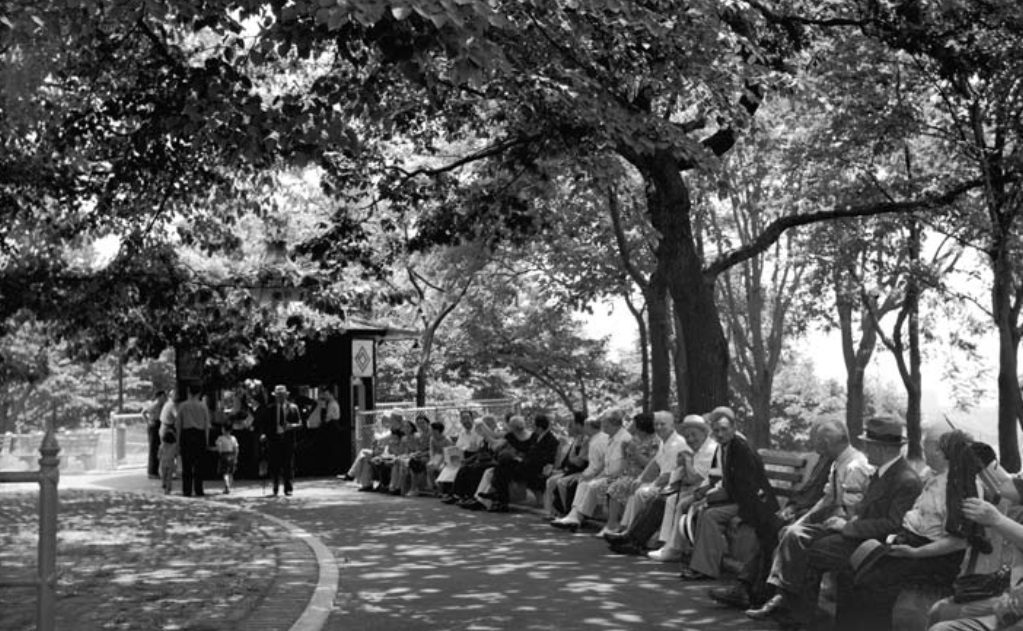
The land that is now Owl’s Head Park was once a prime fishing and farming area for the Canarsie Native Americans and the first Dutch settlers. Later, Henry C. Murphy, an Irish-American who held multiple political positions, including Brooklyn mayor and U.S. congressman, built a mansion on the glacial ridge overlooking the harbor.
In 1866, wealthy industrialist Eliphalet W. Bliss purchased the estate, renovating the mansion and adding a stable and an observation tower known as “The Castle.”
In his will, Bliss, who passed away in 1903, offered to sell his property to New York City at a price below market value, under the condition that it be preserved as a public park. In 1928, the Bliss estate was officially designated as a city park.
Despite its scenic location, the land and buildings fell into neglect during the Great Depression. Between 1934 and 1937, federal funding helped transform the estate into a picturesque park, adding a large collection of trees, walkways, playgrounds, park buildings, and a recreational plaza with breathtaking southwest-facing views.
During a 2002 renovation, the historic Bliss gates, which had been salvaged decades earlier, were restored and reinstalled at the park’s entrance.
St. John’s Recreation Center
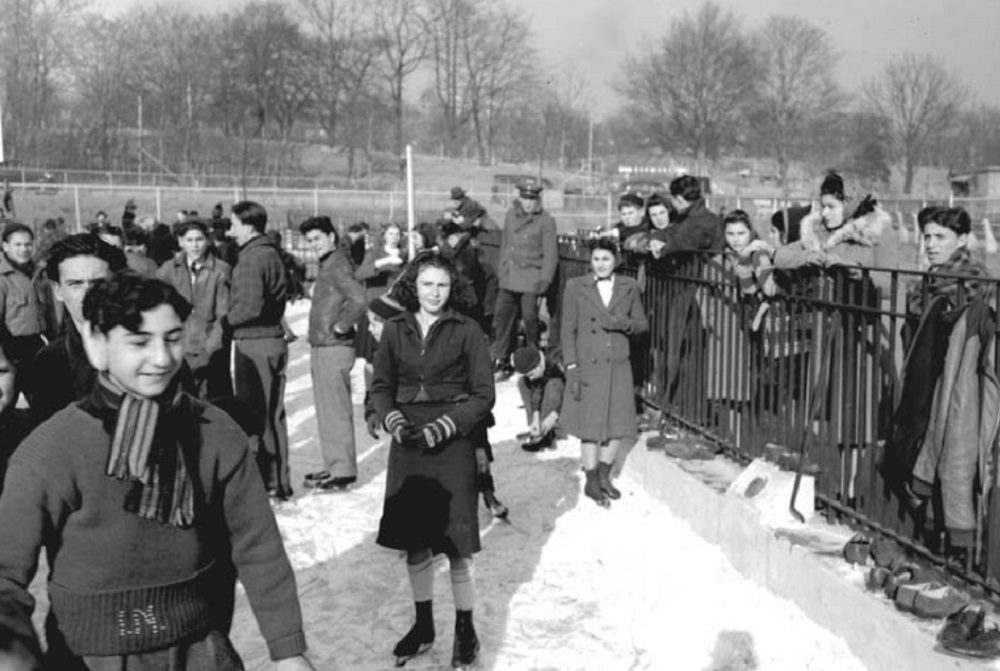
The land that became St. John’s Park was acquired by the city of New York in 1950. Shortly thereafter, St. Mark’s Place, which ran between Schenectady and Troy Avenues, was removed to create a larger park with the long-term goal of building a recreation center in Brooklyn.
The St. John’s Recreation Center was completed in 1956 and became the third year-round facility opened under Parks Commissioner Robert Moses’ initiative to provide structured recreational spaces for children from underserved communities. Moses envisioned these centers as a way to foster positive youth development and improve social conditions.
The first phase of the park’s development, its outdoor component, included three softball fields and a comfort station, completed in 1953 to serve the 800-unit Albany Houses complex, which had been built for families displaced by urban renewal projects.
More than two years later, in 1955, the park introduced basketball and handball courts. Today, the St. John’s Recreation Center remains an important community hub for sports, fitness, and social activities.