

The history of heating systems is a fascinating journey through time, innovation, and technological progress. From Ancient Rome to the present, the evolution of heating systems has been an essential component of comfort and, if not survival, then at least comfortable living. The earliest heating systems can be traced back to Ancient Rome, where underfloor heating, known as the hypocaust, was invented in the 2nd century BCE. This system used a series of pipes and channels installed beneath the floors of buildings to circulate hot air generated by furnaces.
This system was used not only in private homes but also in public baths. During the Middle Ages, fireplaces became a popular means of heating homes. Built from stone or brick, fireplaces were used to heat individual rooms or entire dwellings. In the 18th century, central heating systems were invented, allowing homes to be warmed from a single source, distributing heat throughout the building via a network of channels and pipes. But what about heating in 19th-century Brooklyn? Read more on brooklyn-name.com.
Fireplaces Were Essential
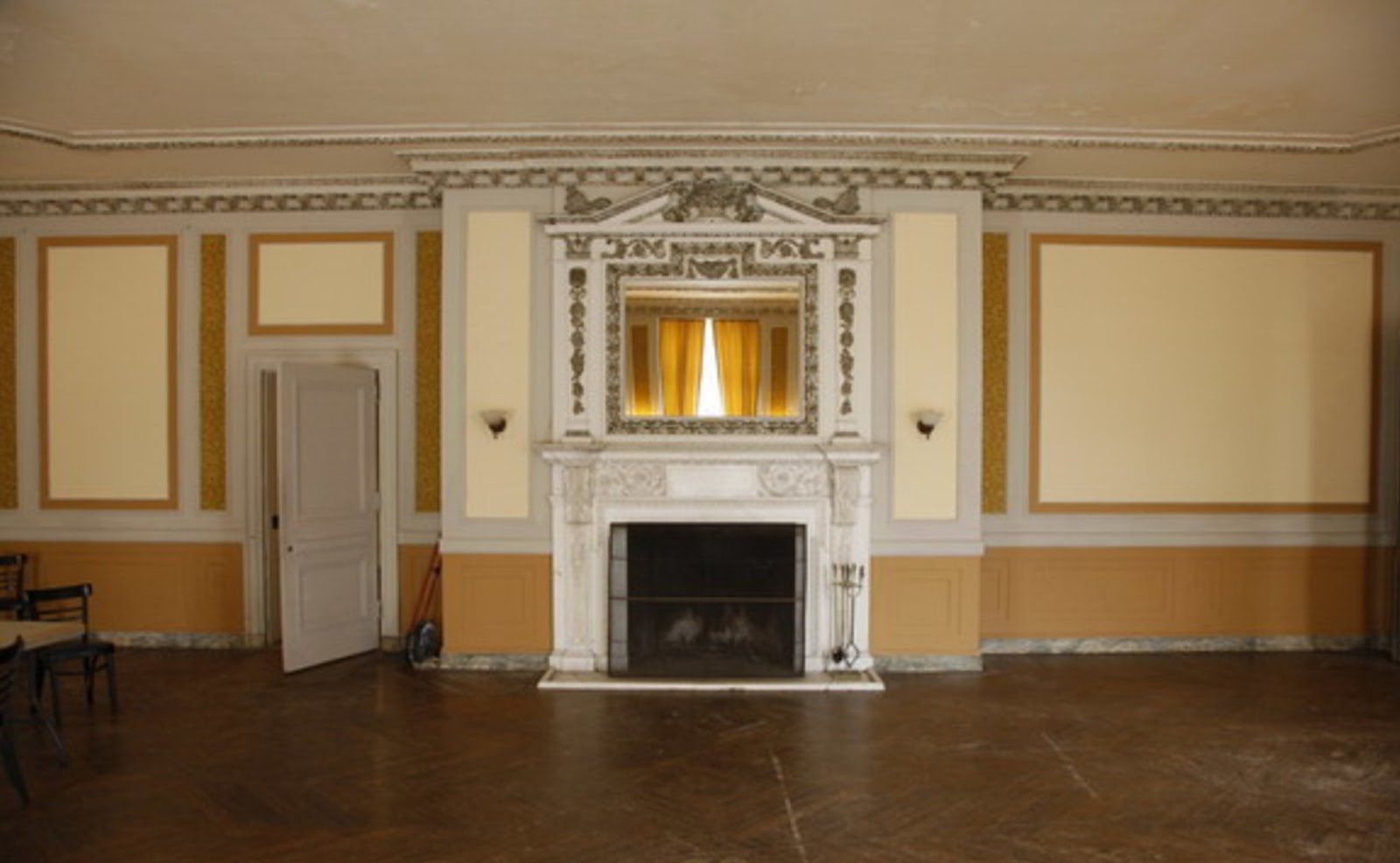
Nowadays, most people love fireplaces—even if they don’t have one. Perhaps it’s the mesmerizing effect of watching an open fire or the romantic and nostalgic ambiance it creates. Fireplaces evoke warmth, coziness, and memories. But if your home is already well-heated by central heating, you can afford to love fireplaces without worrying about what happens when the fire dies out at night or where to find more firewood.
But this wasn’t always the case. When the first homes in Brooklyn were built in the 1600s, fireplaces were not a romantic luxury but a crucial necessity. They were essential for heating homes and cooking food. Back then, fireplaces were large enough to accommodate a variety of cooking tasks while also providing heat for the main living area. Federal and Georgian-style homes often featured formal paneled walls, but at the center of the main room was always a large fireplace.
At that time, fireplaces did not yet have mantels, but panel insets were ideal for displaying paintings. The walls were often topped with decorative pediments that framed the fireplace. By the 1830s, when Brooklyn was rapidly growing, particularly in neighborhoods like Brooklyn Heights, fireplaces became simpler, with just a frame, a mantel shelf, a frieze panel below it, and small pilasters or slender columns.
Marble Replaces Brick
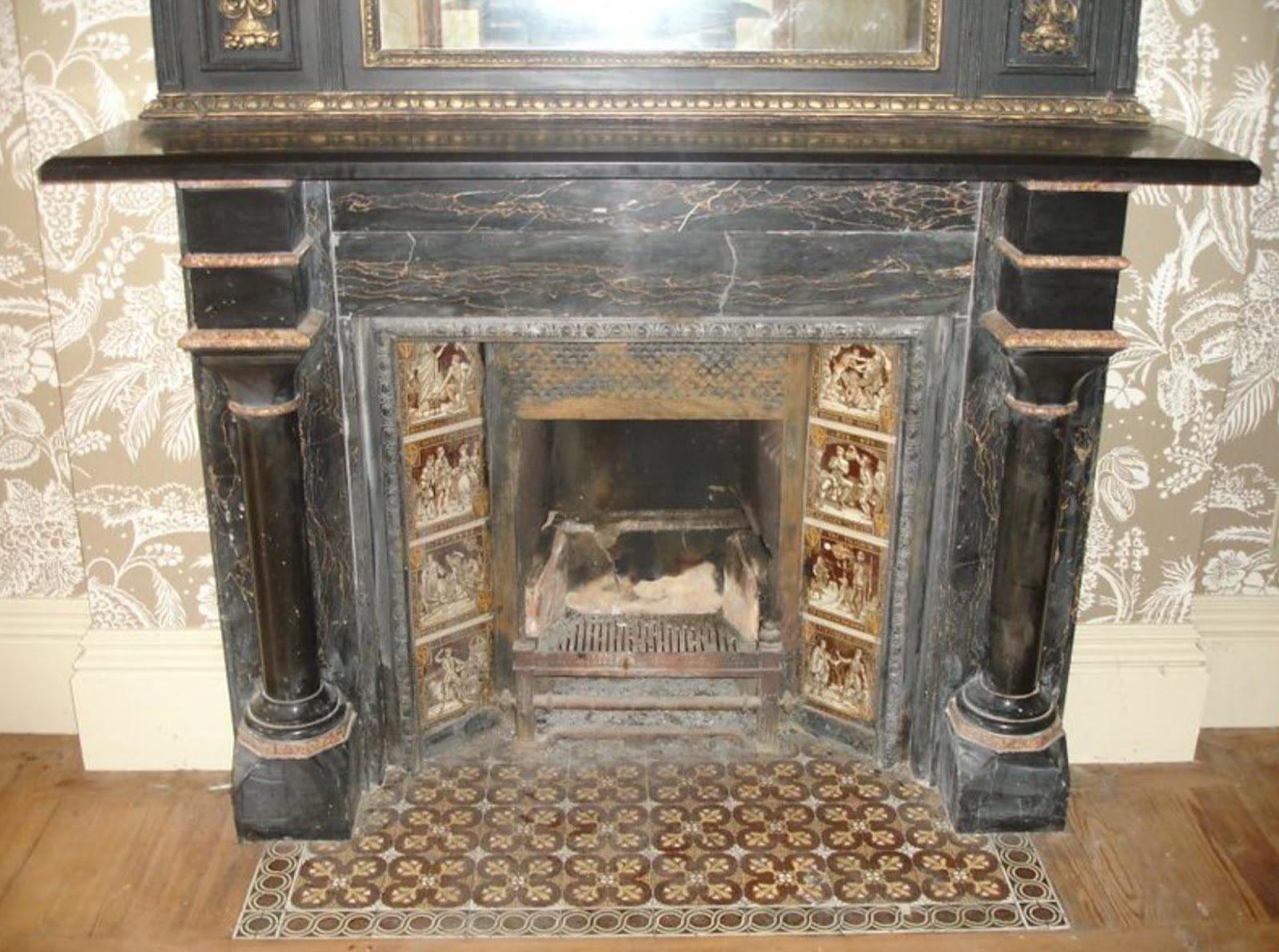
Fireplaces sometimes featured decorative elements, such as classical molding, egg-and-dart motifs, carved branches, sunbursts, or garlands. Mantelpieces were usually made from pine boards painted to resemble wood or marble.
During the Greek Revival, Italianate, and Neo-Grec rowhouse eras, wood was increasingly replaced by marble. White marble was the most popular choice, and in wealthier homes, the carvings became more elaborate, and the fireplaces grew larger. Some living rooms featured massive black marble mantels with striking white or gold veining, simple yet elegant lines, and large pilasters. White marble also remained a highly favored option.
Gothic Revival homes typically featured white marble mantels with simple lines that accommodated Gothic trefoils, quatrefoils, and other ornamental designs. Cast-iron inserts often included Gothic-inspired imagery and shapes. In smaller rooms, fireplaces were made not just of white but also gray marble.
By the mid-19th century, starting in the 1840s and continuing through the Civil War, central heating systems began appearing in Brooklyn’s grand townhouses. According to the book Bricks and Brownstones, it was during this time that fireplaces transitioned from being a primary heat source to a decorative focal point of a room.
The Decline of Fireplaces in Brooklyn
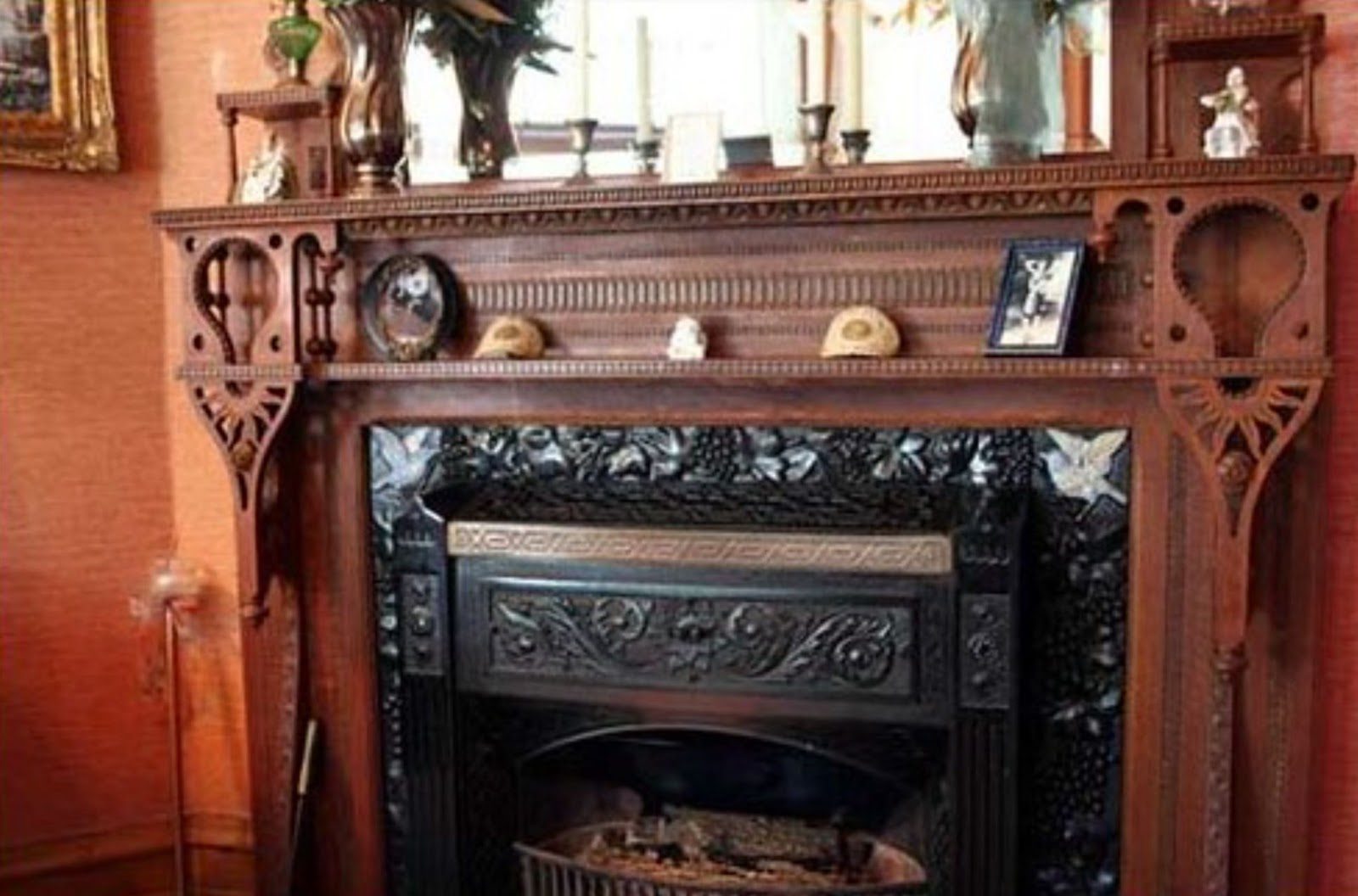
By the 20th century, fireplaces started disappearing from Brooklyn homes. Space efficiency became more important to homebuyers than decorative but unused fireplaces. Developers of large apartment buildings catering to the middle and upper classes in the 1920s and 1930s often installed fireplaces not in individual units but in building lobbies, using them as status symbols without sacrificing living space.
If fireplaces were included in apartments, they were often found in dining rooms or studies, rather than in every major room. In high-end apartments, fireplaces were still included, but they were primarily decorative features whose popularity fluctuated. For every Brooklynite who cherished fireplaces, there was another who viewed them as outdated and impractical. Modernist architects and apartment developers rarely included fireplaces in their designs.
The Rise of Steam Heating
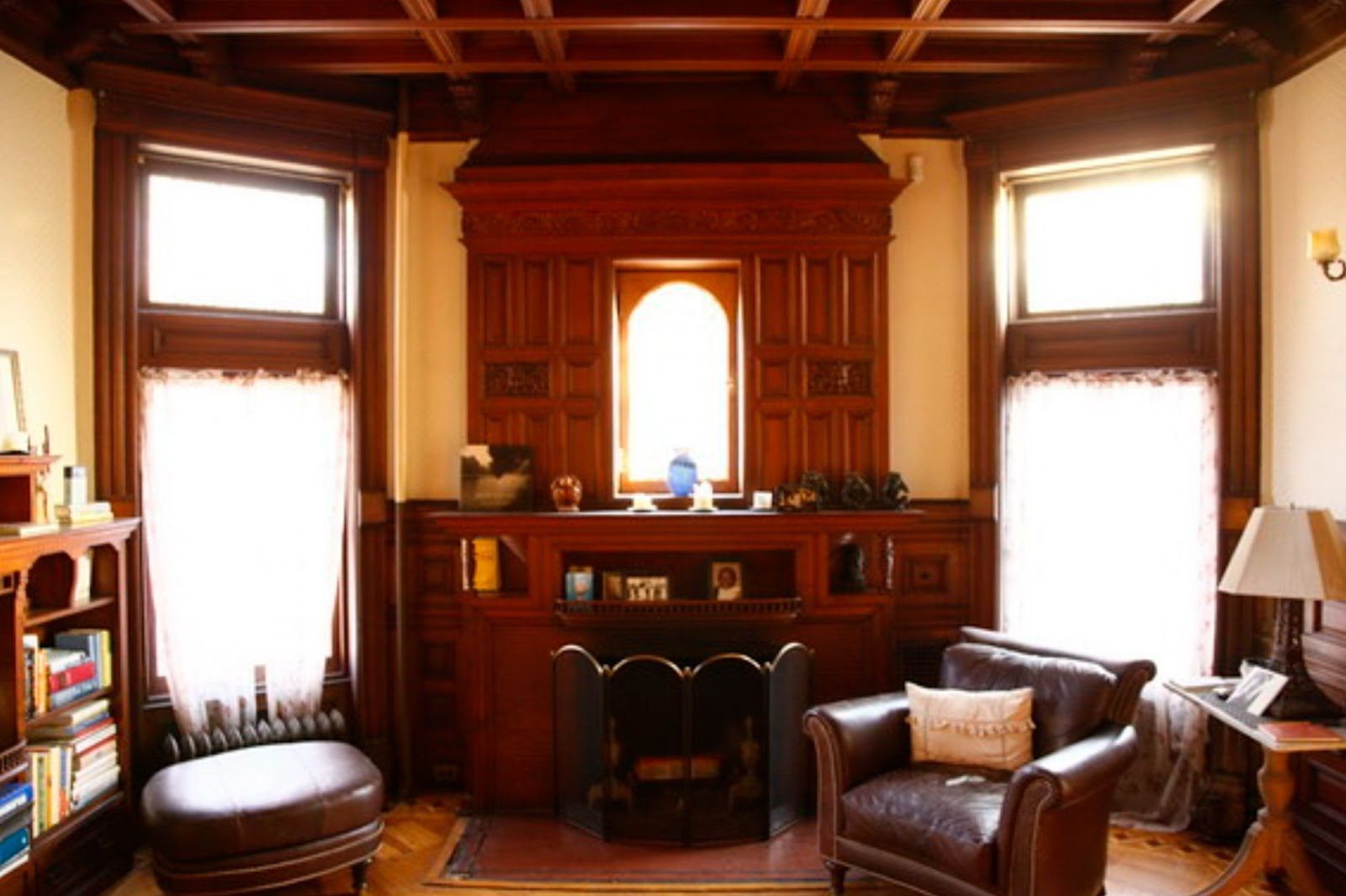
Steam heating replaced fireplaces in Brooklyn. New York has the oldest and largest steam system of any American city. In 1834, Dennis Olmsted patented a type of radiator for stoves, and in 1855, Prussian businessman Franz San Galli invented the first heating radiator. Soon, cast-iron radiators became fashionable worldwide, especially in major cities in Europe and the northeastern United States.
Early radiators, known as “mattress radiators,” were bulkier and flatter than those developed in Brooklyn a few decades later. Some cities favored hot water radiators, which are still found in parts of New York City today. However, New York and Brooklyn, for the most part, rely on steam heating.
Today, New York City has approximately 105 miles of underground steam pipes, supplying a cleaner energy source than oil or coal to over 1,500 buildings. Some of the city’s most iconic buildings, including the Empire State Building, the Chrysler Building, Grand Central Terminal, the United Nations headquarters, and Rockefeller Center, are heated with steam.
The Return of Fireplaces?
Despite all these changes, fireplaces are making a comeback. More than just a heating source, fireplaces symbolize history, aesthetics, and prestige. For some, the ability to light a fire in winter is worth any expense. Others value fireplaces for their decorative mantels and nostalgic charm, reminiscent of old homes and Christmas celebrations.
For others, whether wood-burning, gas, or coal-fired, fireplaces provide an opportunity to reduce heating costs and save on energy bills. Some Brooklyn homeowners embrace exposed brick and remove mantels altogether, leaving only the firebox as a minimalist design feature.
Regardless of style or purpose, one thing is certain—fireplaces will always remain popular.