

This company’s vivid history is of great importance to Brooklyn. After all, its establishment demonstrates the transformation of the region into an economic power in the US. The city opposed New York across the East River. The history of Pfizer Inc. until the 1950s is also a history of German immigrants and medicinal approaches and drugs that may seem unacceptable and strange nowadays. This is the story of patent drugs and deworming lozenges. Read about the origin of the real local startup, Charles Pfizer and Co., which moved from the development of drugs against parasites in 1849 to the leader in the distribution of vaccines in the 21st century, on brooklyn-name.com.
The world of pharmacists
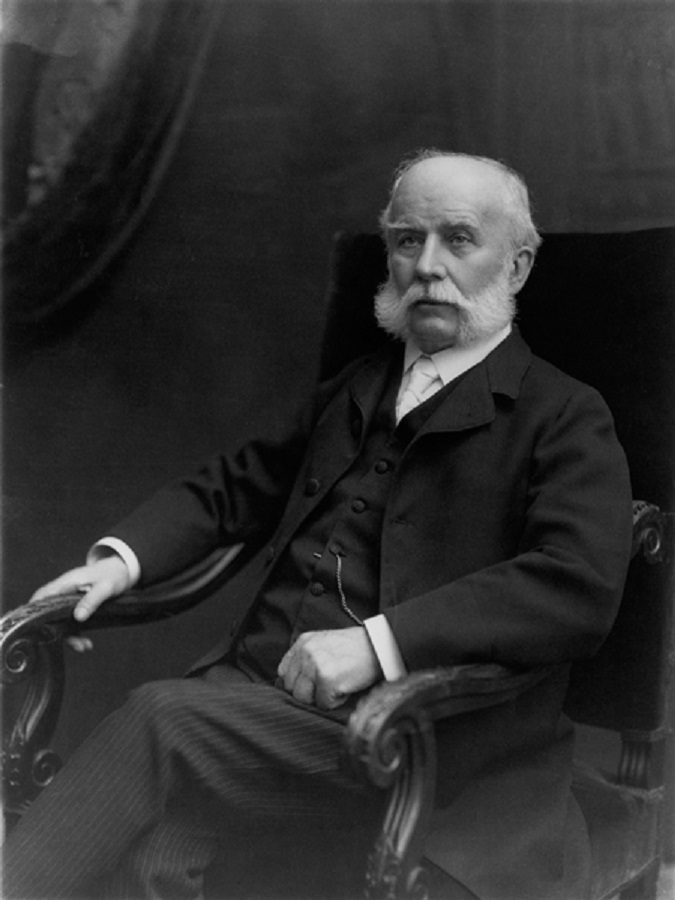
It is impossible to tell this story without considering pharmacies at that time. They were the first manufacturers of natural medicines. They did not see their mission quite correctly and it had certain limitations. The pharmacists cured the symptoms only and did not look for the cause of many diseases. Eventually, pharmacies would work with industrially produced drugs and dubious supplements that treated everything and resembled soft drinks in stores. There were also a lot of them.
Recently, German biotech company Biopharmaceutical New Technologies has developed a vaccine against COVID-19. They made it together with Pfizer, one of the world’s largest companies for manufacturing and distribution. For this, we should thank the researchers and doctors who helped us reach this point. So does Brooklyn, which also has the opportunity to share some of that pride. The company was founded in 1849. Although, to be precise, it happened in the district or the independent city of Williamsburg.
The project launched by immigrants
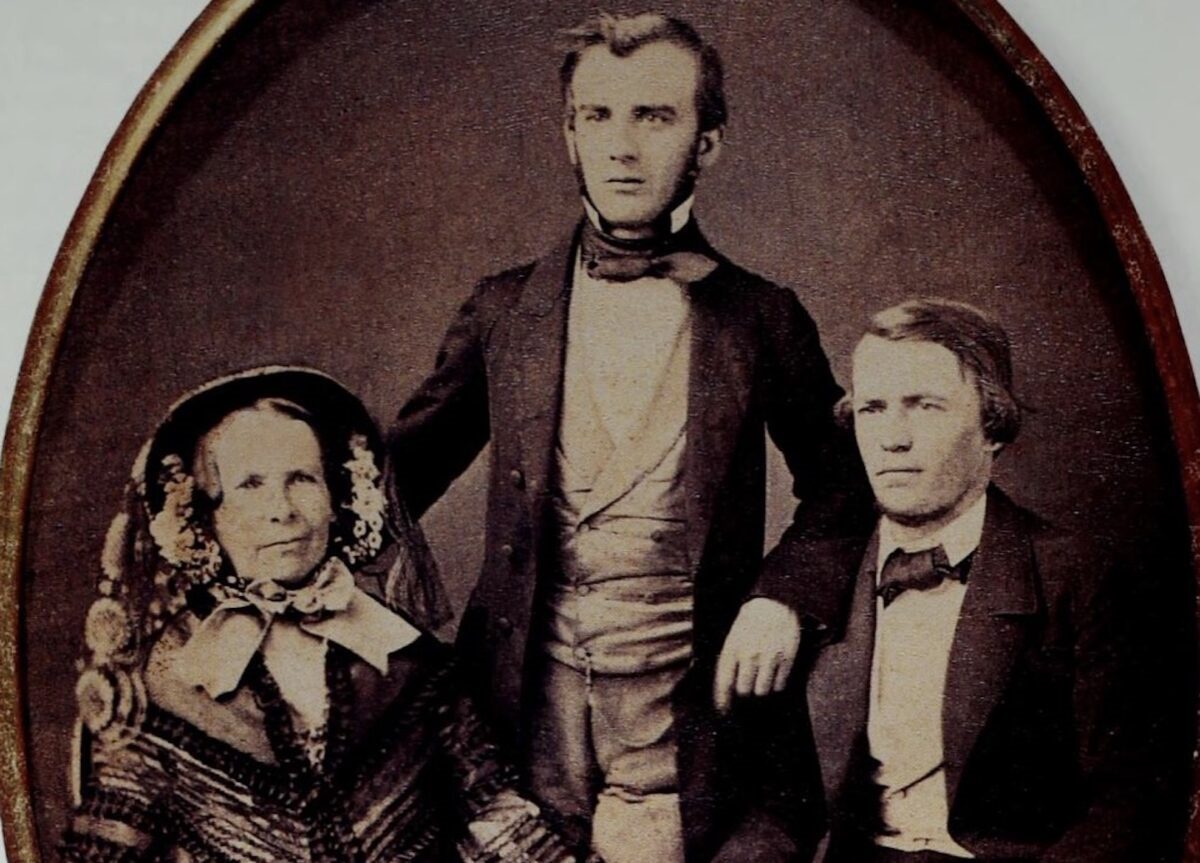
Karl (Charles) Pfizer was one of Germans who immigrated to the US in the 1840s. Together with his cousin Erhart, he came here in the autumn of 1848. Unlike the experience of many newcomers, they were wealthy and well-educated. Charles was a chemist and his cousin was familiar with the grocery and confectionary trades.
The application of science in contemporary life only began to be investigated at that time. Charles was trained in a region that was not yet widely known for its investigations. Rodengen, author of The Legend of Pfizer, wrote that chemicals that interested only scientists were becoming important in other areas of life. Charles also understood that almost no one tried to meet this ever-increasing demand in the US.
Our heroes established their new chemical company in Kings County, Long Island in 1849. It was located south of the Brooklyn Navy Yard. No community on Long Island was part of New York City until 1898. Two expatriate entrepreneurs simply noticed a place near Williamsburg, north of the fast-growing metropolis.
Pfizer’s first headquarters
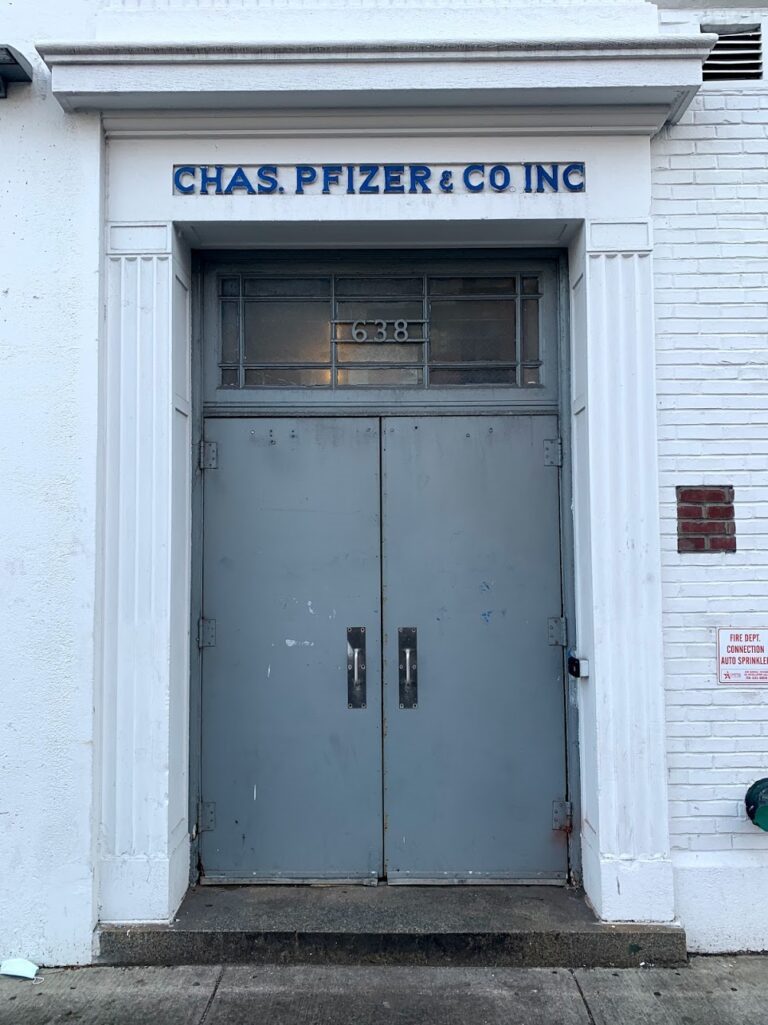
Williamsburg was a former village and a promising location for novel manufacturers due to its proximity to the bustling waterfront and equally active waters of Newtown Creek. At that time, numerous plants were already operating there.
The headquarters was a little far from the embankment. They could not afford to build something else. Thus, the brothers moved into an existing red brick building due to a $2,500 investment from Pfizer’s father. It’s about $78,000 adjusted for inflation.
The cooperation of the brothers may seem a bit strange. However, look in your first aid kit. How many of the drugs have a taste? Most of them would be difficult to take without supplements. The entrepreneurs released their first product, a santonin, in 1849. It wasn’t very tasty but it helped to cure intestinal worms.
The brothers made the remedy from the flowers of the Artemisia plant and added an almond-toffee flavor. Since these parasites were a big issue in the mid-nineteenth century, the product was sold out instantly, allowing them to expand into other chemicals. When the business started, exciting events began to happen here. In 1851, Williamsburg became a city. It was included in the expanding city of Brooklyn along with Bushwick and Green Point in four years. The association became commonly known as the Eastern District.
Penicillin changed the world
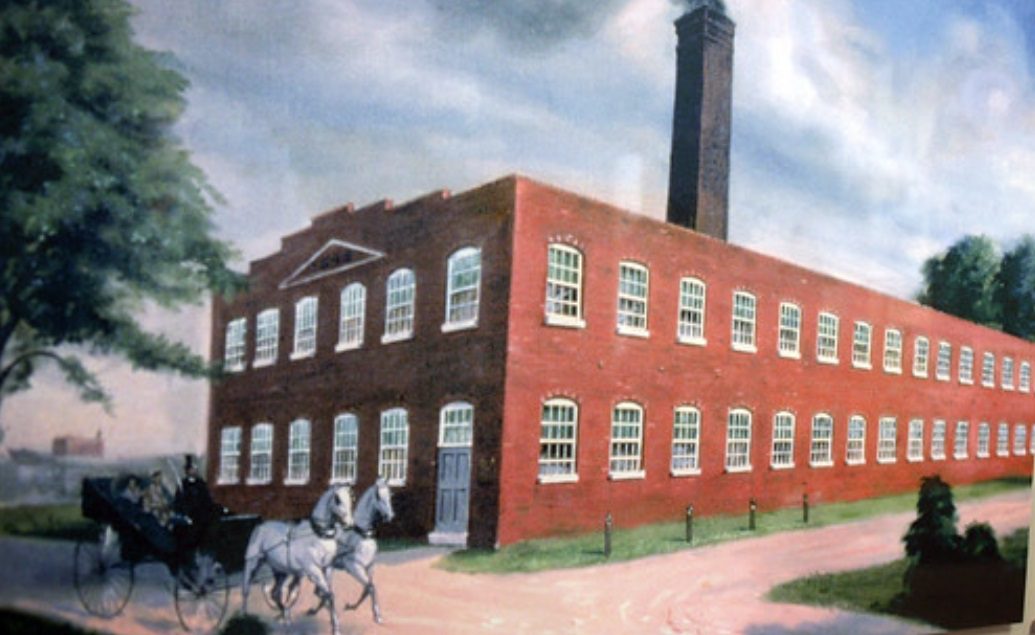
The local population grew rapidly, as well as the companies. Over the next 30 years, our heroes moved far beyond their primary location at Bartlett and Thompson. As in many areas at that time, the chemical aroma was strong here. The company quickly moved beyond Brooklyn. They placed their main headquarters closer to Wall Street in 1868. Their main facility produced chloroform, iodine, camphor, borax and morphine. They also created non-medical products such as tartar.
Scott H. Podolsky wrote in his article Antibiotics and the Social History of the Controlled Clinical Trials, 1950–1970 that during the first 100 years, the company was not involved in the pharmaceutical market but rather focused on the manufacturing and processing of various compounds such as lemon acid. By the way, it was its world’s largest manufacturer before World War II.
The fermentation technologies utilized in the manufacturing of citric acid made the company a leader of mass-produced penicillin in the US during World War II. They also became one of the biggest manufacturers of dihydro- and streptomycin, selling the drugs to others for distribution.
Penicillin changed the world. It expanded the company’s range through mergers and the expansion of offices. The main headquarters continued to stay on 42nd Street, in Manhattan, across the street from the famous Daily News Building.
In Brooklyn, the company remained at its historical location until 2008 when the old plant was finally closed.
