

Innovation affects all areas of business and tourism is no exception. Big cities that cannot offer a beach holiday are trying to find other solutions. The invention of industrial tourism became such a way out, especially for an industrial area like Brooklyn. What can be of interest to industrial tourists? Read more on brooklyn-name.
The development of a new type of tourism
Industrial tourism is a type of research rather than recreation. It includes the study of industrial facilities typical for this area.
Such an unusual type of recreation appeared in France in the 20th century. It was meant to study the wineries of the region. Then, industrial tourism underwent a number of changes. It began to include not only working enterprises but also those that have already closed. Options like digging, infiltration and stalking came into being.
Stalking became an offshoot of industrial tourism. It includes visits to abandoned buildings, such as former factories, plants and private houses. Stalking, unlike official industrial tourism, is semi-legal. Stalkers illegally enter the territory of abandoned objects and put themselves in danger.
Infiltration is similar to stalking. It differs only in that the visits take place on working enterprises, to which there is no access. It is more dangerous and serious. After all, it requires fundamental training. In addition to breaking the law, infiltrators can be affected by the company’s work process because they climb into places where it is forbidden to enter without professional preparation.
Diggers are interested in underground tunnels, sewers, etc. These three types of industrial tourism are free. In addition, there is paid and safe commercial industrial tourism. In this case, visitors are accompanied by guides and the places are checked for safety in advance.
Red Hook Grain Terminal
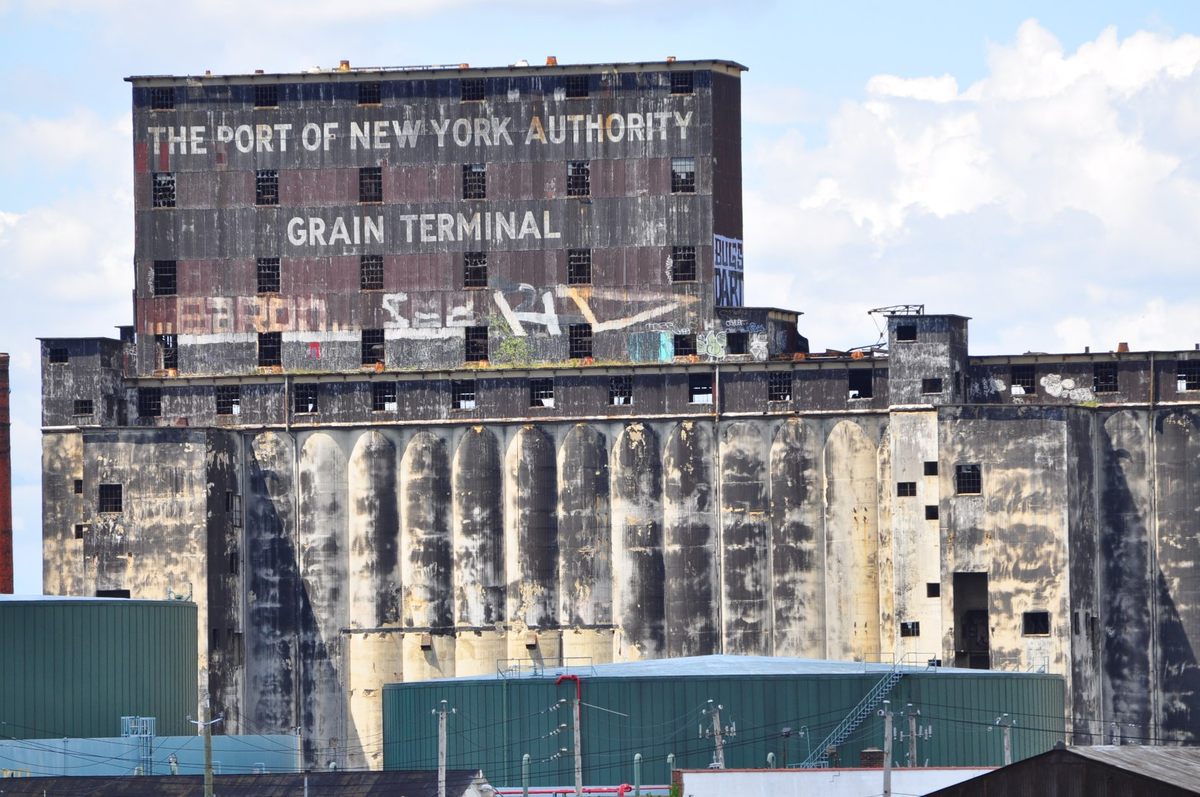
Brooklyn is known not only for industrial districts but also for ports. Many tons of various cargoes were transshipped through the Brooklyn terminals. One of the largest was the Red Hook Grain Terminal. Once, it was a real monster of grain transportation.
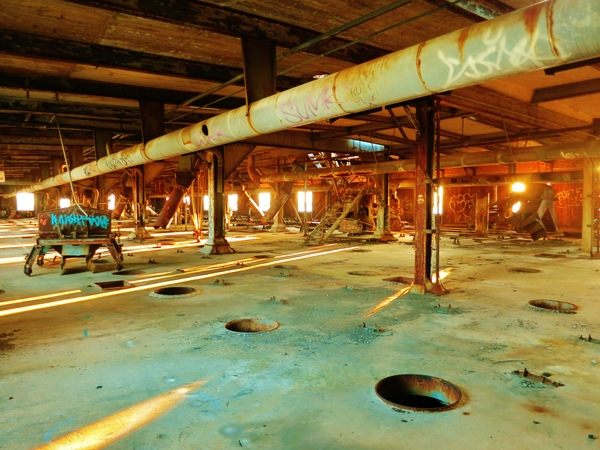
The terminal is really huge. It is a 12-story building 430 feet long. There were 54 cement silos on its territory and each was 120 feet tall. This is a place of incredible size. It was built in 1922, seven years after Brooklyn’s last grain terminal was converted into a warehouse. Shortly after its opening, the terminal was called an unbelievable mistake. There was simply no need for it. For 22 years, it did not bring any profit. In 1944, it was sold to the private port owners. By 1965, it was officially deactivated. Brooklyn’s largest grain terminal has ceased to exist. In 1997, it was bought by John Quadrozzi, Sr., an eccentric fan of the Gowanus district, in which the terminal was located.
The Red Hook Grain Terminal continues to attract the attention of industrial tourists and lovers of abandoned buildings. Rusty structures and giant equipment are the basics for the development of industrial tourism.
Victorian Greenhouse in Brooklyn
Greenhouse McGovern Weir is considered one of the oldest buildings in New York. This is almost the last reminder of the Victorian era for the locals.
In the 19th century, gardening and flower business were highly valued. It was one of the most profitable industries. Thus, the sale of flowers to theaters gave a quarter of a million dollars per year. However, everything changed later. The McGovern Weir Greenhouse was located across the street from Brooklyn’s largest cemetery but that didn’t help. Sales were falling.
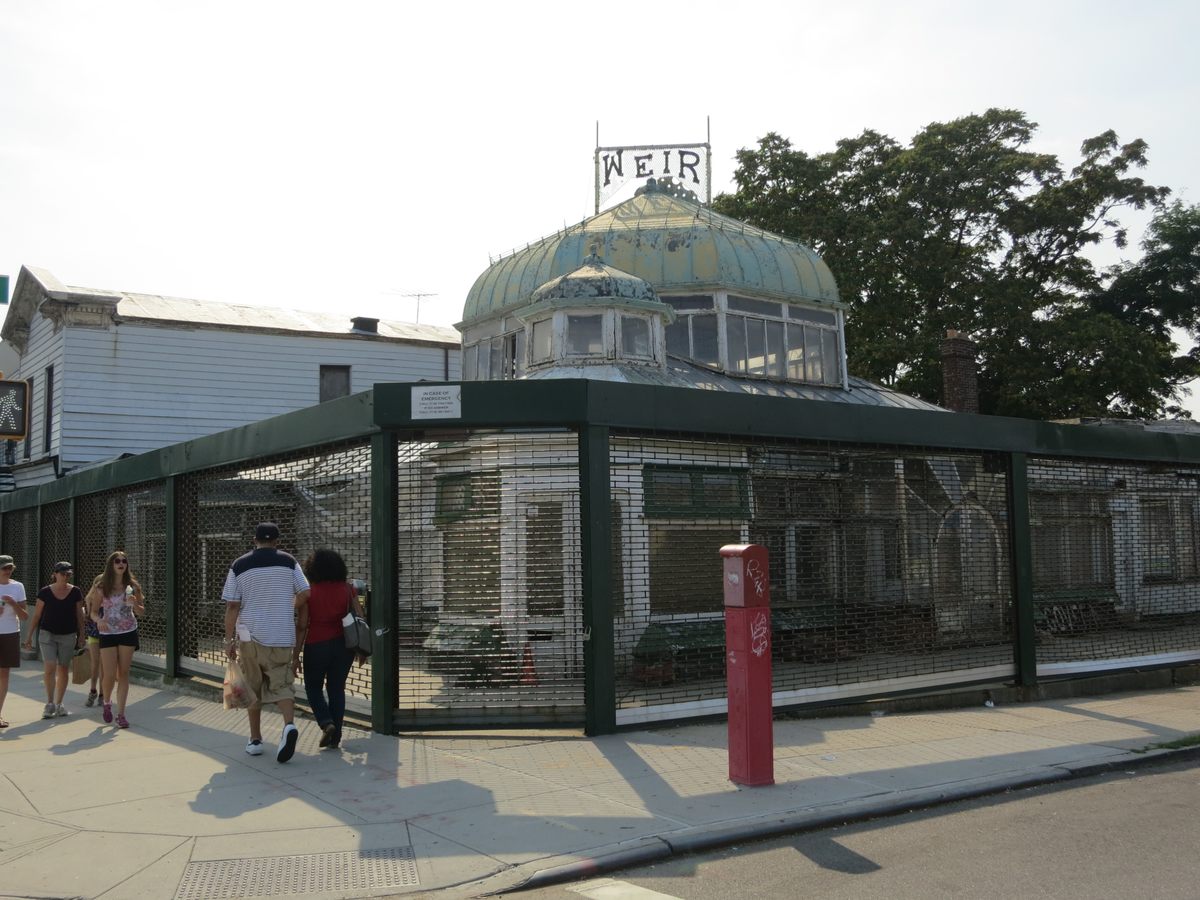
This greenhouse is an old building with a metal and glass frame. This beautiful house was able to survive industrial changes but was not saved from oblivion.
It was built in 1880 by Mr. Gillespie. It was a family business of growing flowers and vegetables.
Nowadays the time of the McGovern Weir Greenhouse is over. The building was lost among the new skyscrapers. In 2012, Greenwood Cemetery bought the greenhouse for $1.6 million. Their plans included creating a museum in memory of those buried in the cemetery.
Construction is slow. Thus, industrial tourism lovers still have time to see the ancient building and feel the spirit of floristry of the Victorian era.
Neglected power plant
There is an old brick house on the waterfront in Brooklyn. This is an abandoned power plant. Brooklynites call it Jumping Jack. The builders occasionally placed the steel beams in such a way that they seemed to reveal a jumping person. That is the reason for the nickname.
According to the documents found in the building, it ceased its industrial existence in the 1960s. It is believed that it was a power station. Another theory claims that it was a pumping station.
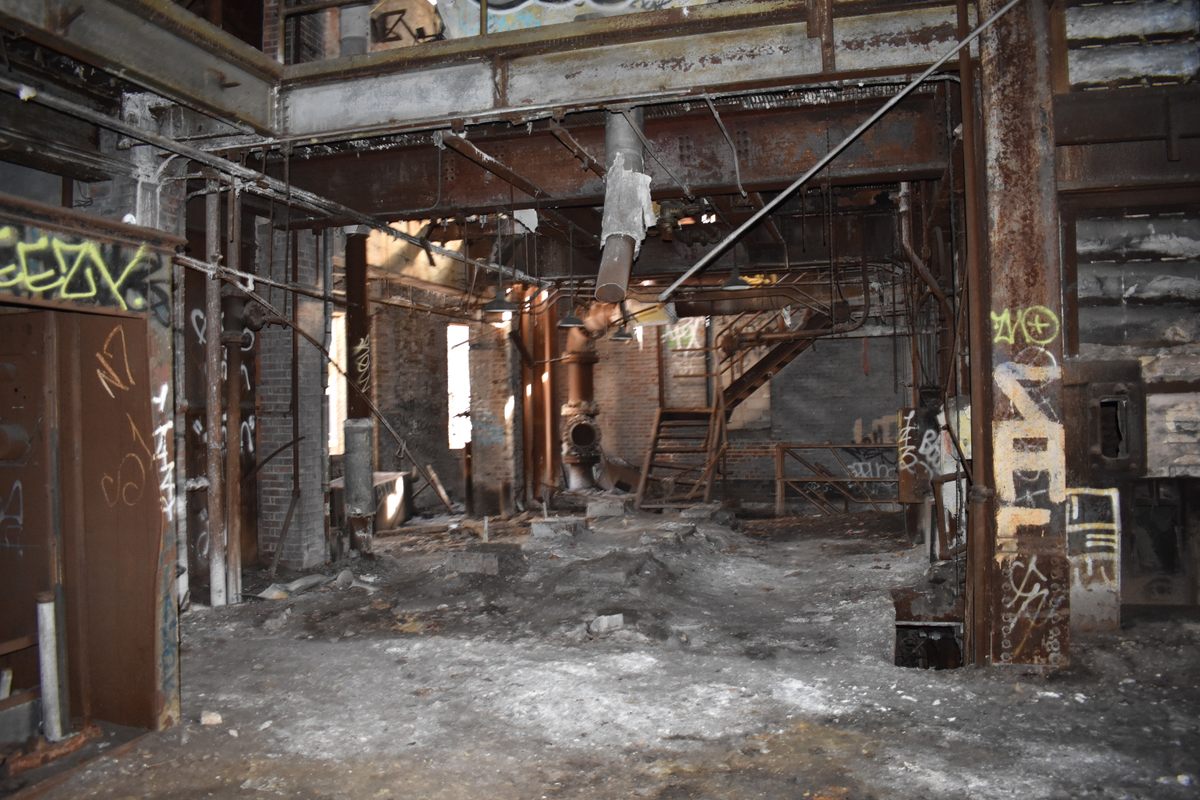
After it was closed, it housed a butcher shop for a while. This is evidenced by the equipment found here.
After the shop closed, the building became a favorite place among stalkers and vagabonds. The walls are painted with graffiti. The old power plant is the most dangerous place for industrial tourism in Brooklyn. Rotten ceilings, stairs and floors are dangerous at every corner. At the same time, it is safe from the ecological point of view. Thus, the abandoned NuHart plant is dangerous with hazardous waste.
