

Frank Press, a geophysicist from the Massachusetts Institute of Technology, served as the chief science advisor to President Jimmy Carter and as the president of the National Academy of Sciences (NAS). He helped develop innovative quantitative approaches to seismology, introducing computer technology to track and measure earthquakes. Learn more about the life and career of this renowned Brooklyn-born scientist on brooklyn-name.com.
Columbia University and an Early Fascination with Science
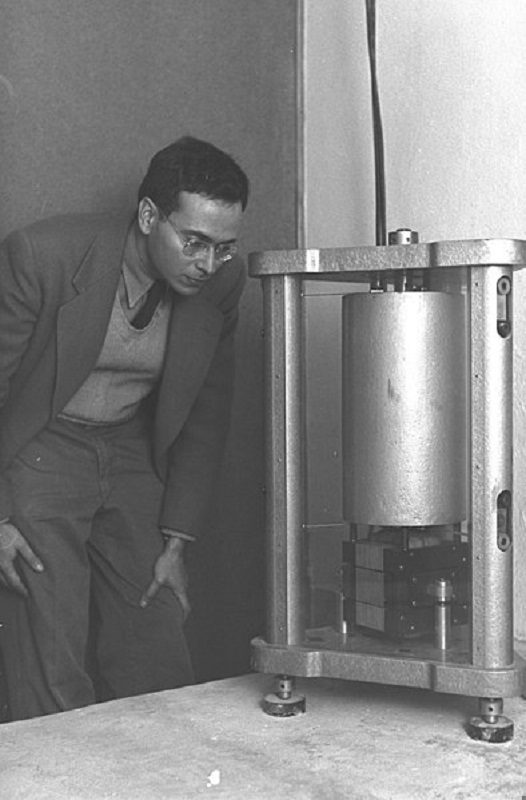
Frank Press was born in Brooklyn in December 1924. His parents, Solomon and Dora Press, were immigrants from Belarus who had fled to China after the 1917 Russian Revolution before moving to the United States and settling in Brooklyn. Frank was the youngest of three children. Even as a child, the son of Jewish immigrants was fascinated by technical experiments. It’s a well-known story that in his younger years, a teacher gave him an assignment to conduct a magnetic survey of Van Cortlandt Park in the Bronx, providing him with a magnetometer to do so. Press was captivated by the device and its capabilities. It was on that day that the boy decided what he would do with his life.
Frank Press earned his bachelor’s degree from the City College of New York in 1944. He then went on to receive his master’s and doctoral degrees from Columbia University in 1946 and 1949, respectively, after which he began teaching at the university. In 1955, Press was recruited to the California Institute of Technology by Robert P. Sharp, the head of Caltech’s Division of Geological Sciences, where he became the director of the Seismological Laboratory.
Director of the Seismological Laboratory
At the same time, the Seismo Lab was home to titans of seismology: Charles Richter, Beno Gutenberg, and Hugo Benioff. Gutenberg and Richter had been working together to create a logarithmic scale to describe the magnitude of earthquakes.
It was Beno Gutenberg, the lab’s founder, whom Frank Press succeeded as director. During his time at Caltech, Press began consulting for the federal government. This was because seismic equipment was essential for detecting nuclear explosions. Frank served on presidential advisory boards starting with the Kennedy administration.
In 1965, he was appointed a professor of geophysics and chairman of the Department of Earth and Planetary Sciences at the Massachusetts Institute of Technology. Frank Press wanted to expand beyond seismology and create a broad geophysical department, collaborating with the Woods Hole Oceanographic Institution and helping to work on the joint MIT-WHOI program.
President of the National Academy of Sciences
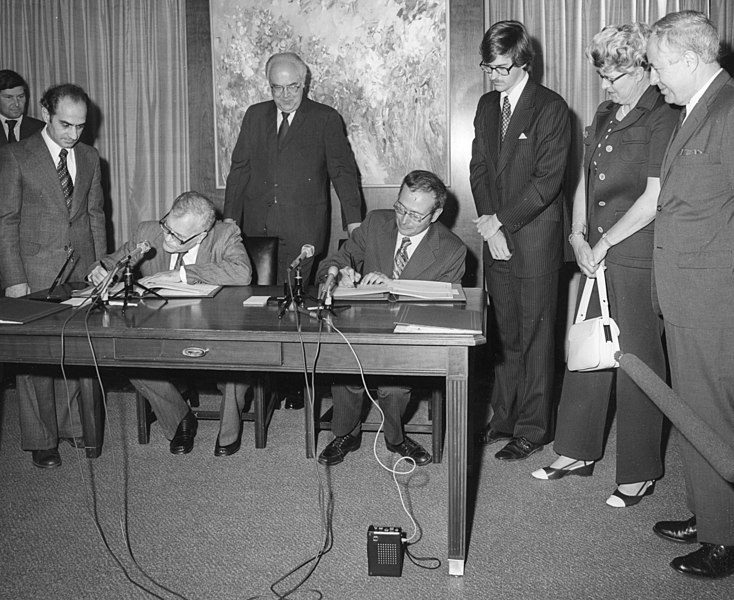
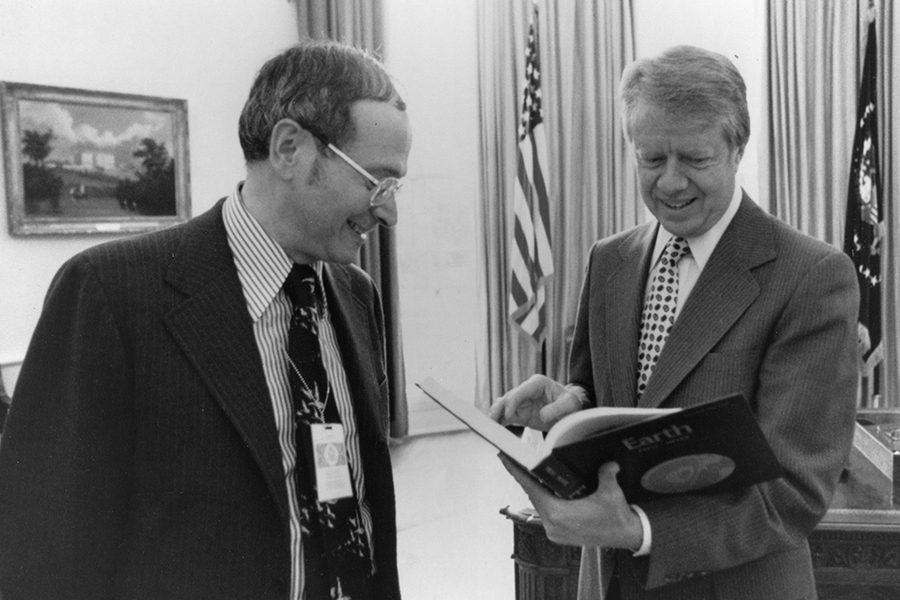
After continuing to serve on scientific advisory boards during the Johnson and Nixon presidencies, Press received an offer from Jimmy Carter in 1977 to become his White House science advisor. In this role, the scientist served a momentous four-year term as both the President’s science advisor and the director of the Office of Science and Technology Policy in the White House’s Executive Office. He was later elected president of the National Academy of Sciences.
Among his many awards and nearly 30 honorary degrees, Frank Press received the Gold Medal from the Royal Astronomical Society, the NASA Distinguished Public Service Medal, the Japan Prize, the Vannevar Bush Award, and the National Medal of Science for his contributions to understanding the Earth’s deepest interior and mitigating the effects of natural disasters.
Press was a loving father and grandfather, survived by his two children, William and Paula, two grandchildren, and two great-grandchildren. Frank Press passed away on January 29, 2020, at the age of 95.