

Coney Island was first used as a recreational and entertainment destination in the early nineteenth century. It was then that the construction of luxury hotels began, turning the island into a destination for a refined vacation. This was where the wealthy public stayed after traveling from Manhattan to the coast. Learn more at brooklyn-name.com.
Quantity over quality
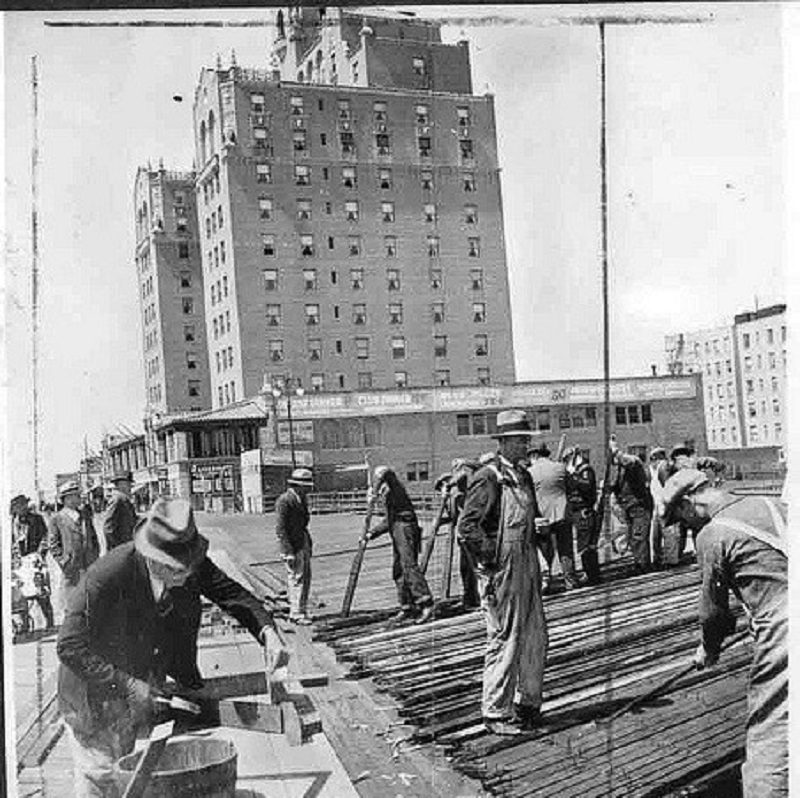
Over time, at the beginning of the 20th century, Coney Island’s life changed significantly. It turned from an island to a peninsula while also becoming a popular spot for mass recreation. It became a place of numerous sites and attractions for wild and fun recreation and entertainment. Although luxury had practically disappeared from Coney Island, the local authorities were not discouraged. They quickly understood that the resort’s enormous popularity could earn them a lot of money. For instance, when a million people pay five cents for a hot dog, it always exceeds what a dozen noble gentlemen pay for several pricey dishes in elite restaurants. As a result, nobody was particularly upset by the fact that mass participation had replaced elitism because quantity always wins over quality.
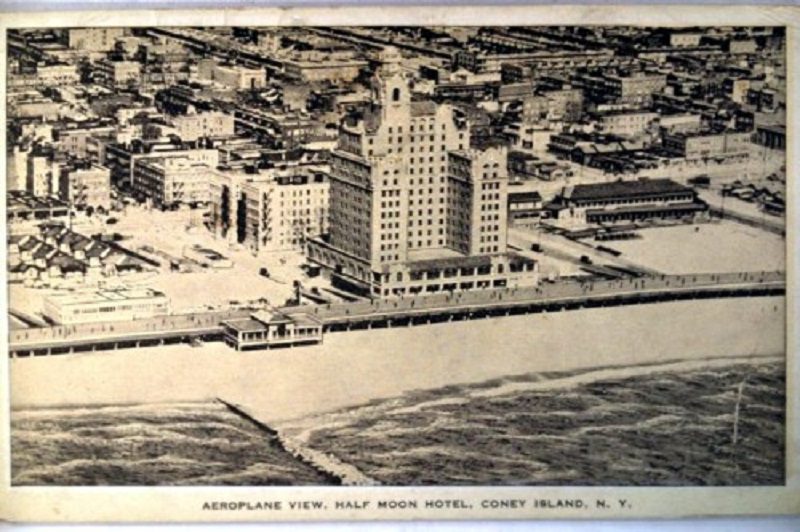
However, worn down by the crowds, Coney Island’s founding fathers questioned if they were doing everything right. They were haunted by the glory of Atlantic City, where luxury hotels still existed and wealthy families spent their summers on the Atlantic Coast. This explains the appearance of a massive sixteen-story hotel with a capacity of 400 rooms on one of the beaches. The building was constructed at a considerable distance from popular amusement parks and cafes. The structure was named the Half Moon in honor of Henry Hudson’s legendary ship. The hotel’s construction was supported by members of the Coney Island Chamber of Commerce, which included some of the wealthiest and most successful owners of local amusement parks.
The hotel was designed in 1925 by George B. Post & Sons, who specialized in Colonial Revival architecture. However, for this hotel, an exotic Spanish Colonial style was chosen. The center tower stood out as the ensemble’s focal point. The building itself was shaped like a “C” with two wings.
The Great Depression
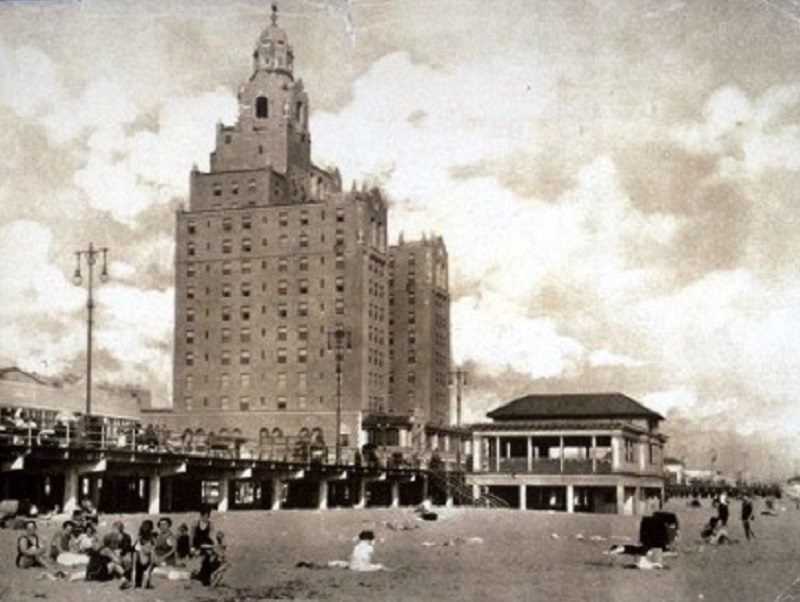
At the start, the Half Moon was a huge success. The hotel quickly became a popular destination for newlyweds who wanted to celebrate their weddings here. This location was also famous for banquets and other types of events. However, the Great Depression got in the way of the happy history of an elite hotel. The Half Moon started to face financial difficulties. In the end, the hotel managed to avoid bankruptcy. Furthermore, it continued to function despite everything. However, the dream of creating a hugely profitable summer resort business project was put on hold during the Great Depression. So, in 1939, Parks Commissioner Robert Moses applied to City Hall for permission to demolish it. However, the hotel was not demolished.
Soon, it was featured in another well-known story, although a criminal one. In the late 1930s, newspapers published horror stories about gangsters who made money from alcohol smuggling and hunted down criminal competition. We’re talking about a gang called Murder Inc. Members of this gang worked for the so-called “Syndicate”, which served as its punitive body. They destroyed everyone who, as the mafia believed, stood in their way. They were usually other gangsters.
Later, one of the gang members, Kid Twist Reles, served as an informant, to which he agreed to avoid prison and the death penalty. In November 1941, Reles was scheduled to testify against the gang leaders in a Brooklyn court.
As a result, the district attorney’s office all this time kept the gangster under constant police protection in the hotel Half Moon. Despite being guarded by five detectives, on November 12, the night before his trial, Reles was found dead on the roof of one of the hotel’s lower towers. It appeared as though he tried to jump in an attempt to escape, but was unsuccessful. But nobody believed that, everyone knew that Reles was thrown out the window. At the time, the hotel received much more attention than in the last few years.
World War II
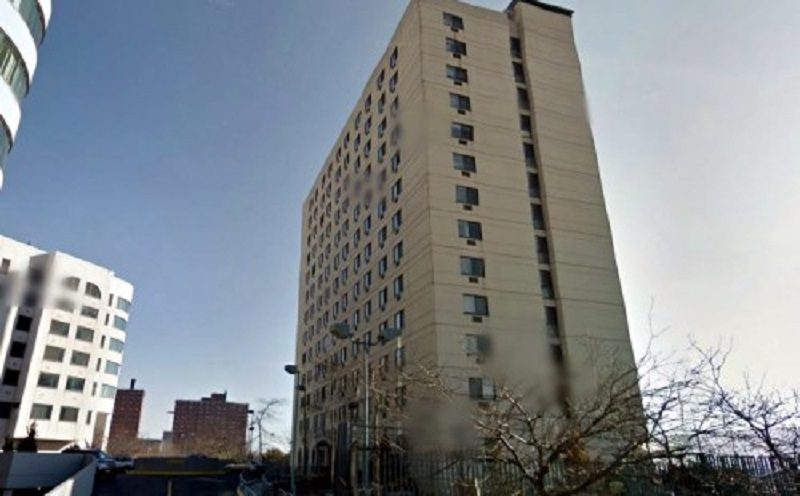
In 1943, the military took over the hotel and converted it into a naval hospital with a rehabilitation center known as the Seagate US Naval Special Hospital. During the war, 4,832 wounded soldiers were treated here. Following the war, the Navy reclaimed it, and the hotel reopened as the Half Moon in 1946.
In 1949, the hotel was sold for a million dollars and converted into Harbor Hospital. It was renowned for its maternity wards. Many Brooklyn residents were born here.
In 1951, the Hebrew Home and Hospital for the Aged acquired the hotel intending to convert it into a nursing home with private apartments. There were dining areas, bathrooms and even a synagogue. Until the 1990s, the building was known as the Metropolitan Jewish Geriatric Center, while the hotel was known as the Parshelsky Pavilion.
When the idea of constructing a new Jewish Geriatric Center on the seashore arose, it became evident that the existing hotel was hindering progress. In 1996, it was demolished. That’s how ended the story of one of the symbols of the Coney Island resort area. Once the Half Moon was the tallest building for many kilometers, but now it is only remembered by fans of old Coney Island.